

Fibermaxxing: Benefits, Side Effects & Safe Daily Fiber
Fibermaxxing sounds simple, but too much fiber too fast can backfire. Here is the safer way to raise daily fiber without wrecking your stomach.
Key Takeaways & Summary
Fibermaxxing sounds simple, but too much fiber too fast can backfire. Here is the safer way to raise daily fiber without wrecking your stomach.
Macro & Recipe Nutrition Calculator
Calculate calories, protein, carbs, and fat per serving for home recipes.
If you have spent any time on TikTok or Instagram lately, you have probably seen someone talking about fibermaxxing — building every meal around fiber-rich foods to max out their daily intake. Smoothies packed with chia seeds, giant lentil bowls, psyllium husk shots. It is a trend that is hard to miss.
Useful “daily fiber intake” advice must fit your experience. Respect your starting point.
The core idea is not new. Dietitians and nutritionists have recommended eating more fiber for decades. What is new is the framing: intentionally prioritizing fiber the same way the fitness world once obsessed over protein.
Here is the honest version: eating enough fiber is genuinely beneficial for digestion, blood sugar, heart health, and weight management. But chasing the highest number possible — especially overnight — can cause real discomfort and is not necessary for most people.
This guide explains what fibermaxxing actually means, how much fiber you need based on current official guidance, the benefits that are supported by research, the side effects to watch for, and how to increase your intake safely.
Medical disclaimer: This article is for general educational purposes only. It is not medical advice, diagnosis, or treatment. Talk with a qualified healthcare professional before making major changes to your diet, especially if you have a digestive condition, take medications, or have had abdominal surgery.
What Is Fibermaxxing?
Fibermaxxing is the practice of intentionally maximizing dietary fiber intake by prioritizing high-fiber whole foods at every meal. It is sometimes also spelled “fibremaxxing” (the British spelling of fiber) and follows the same naming convention as other social-media wellness trends like sleepmaxxing and proteinmaxxing.
The trend originated largely on TikTok, where creators share meal prep, fiber-tracking, and gut health content. It reflects a broader shift in online nutrition culture away from strict calorie restriction toward eating foods that support digestion, satiety, and overall health.
There is an important distinction worth making: eating enough fiber is a well-established health recommendation supported by decades of research. Fibermaxxing, as a social-media trend, sometimes takes that recommendation to an extreme — pushing people to consume 50 grams or more per day when the standard guidance is 25–38 grams depending on age and sex.
The goal of this article is to help you separate the evidence-based benefit from the hype.
Why Is Fibermaxxing Trending?
Several factors explain the rise of fibermaxxing in 2024 and 2025:
Gut health awareness. Research into the gut microbiome has grown substantially, and the conversation has moved from clinical papers into mainstream wellness content. Dietary fiber is one of the primary fuels for beneficial gut bacteria, which has made it a central topic.
A shift from pure protein focus. The fitness and nutrition conversation online has long been dominated by protein. As that conversation matured, creators and their audiences began looking at other nutrients — and fiber became the logical next step given its role in satiety and digestion.
The satiety angle. Many people are looking for ways to manage hunger without extreme restriction. Fiber-rich foods add volume to meals, slow digestion, and help people feel fuller for longer — which aligns with sustainable approaches to weight management.
Growing interest in longevity and metabolic health. Blood sugar regulation, cholesterol management, and gut microbiome diversity are all topics that have entered mainstream health conversations, and fiber is linked to all three.
Social media meal prep content. The visual appeal of colorful, plant-forward, fiber-rich meals translates well to social platforms. Lentil soups, chia puddings, and veggie bowls are inherently photogenic and shareable.
How Much Fiber Do You Need Per Day?
The current guidance from the Dietary Guidelines for Americans and the National Academies of Medicine is based on age and sex:
| Group | Daily Fiber Target |
|---|---|
| Women aged 19–50 | 25 grams |
| Women aged 51 and older | 21 grams |
| Men aged 19–50 | 38 grams |
| Men aged 51 and older | 30 grams |
| Children aged 1–3 | 14 grams |
| Children aged 4–8 | 16–20 grams |
| Teens (varies by sex) | 22–31 grams |
A practical rule of thumb from the Institute of Medicine: aim for approximately 14 grams of fiber for every 1,000 calories consumed.
Despite these guidelines, most American adults consume only about 15 grams per day on average, according to USDA data — well below the recommendation for either sex.
That gap is the main reason most health professionals support the general direction of the fibermaxxing trend: most people in the U.S. genuinely need more fiber. The question is how to get there, not whether to try.
Potential Benefits of Eating Enough Fiber
Digestive Regularity
Fiber — particularly insoluble fiber from whole grains, vegetables, and wheat bran — adds bulk to stool and speeds its movement through the digestive tract. This is the most well-established effect of dietary fiber and is why adequate intake is associated with a lower risk of constipation. Soluble fiber absorbs water and forms a gel, which softens stool and reduces the likelihood of diarrhea.
Satiety and Appetite Management
Fiber slows the rate at which food leaves the stomach and delays glucose absorption into the bloodstream. This translates to longer-lasting fullness after meals. Research published in the Journal of Nutrition found that increasing fiber intake by 14 grams per day was associated with a 10% decrease in energy intake and weight loss over time — an effect attributed largely to increased satiety rather than any direct fat-burning mechanism.
Weight Management Support
Fiber contributes to weight management primarily through the satiety mechanism described above. High-fiber foods also tend to be less calorie-dense than highly processed alternatives, meaning you can eat a larger volume of food for the same number of calories. This helps support a moderate calorie deficit without requiring aggressive restriction.
Blood Sugar Management
Soluble fiber — found in oats, legumes, apples, and psyllium — slows the absorption of carbohydrates into the bloodstream, blunting blood sugar spikes after meals. The American Diabetes Association recognizes dietary fiber as beneficial for glycemic management, and its nutrition guidelines recommend 14 grams of fiber per 1,000 calories for people with type 2 diabetes.
Heart Health
Multiple large observational studies have found an association between higher dietary fiber intake and lower risk of cardiovascular disease. Soluble fiber, particularly beta-glucan found in oats and barley, has well-documented effects on LDL (low-density lipoprotein) cholesterol. The FDA has authorized a health claim for beta-glucan from oats and barley regarding heart disease risk reduction.
Gut Microbiome Support
Prebiotic fibers — including inulin, fructooligosaccharides, and resistant starch — serve as food for beneficial gut bacteria such as Lactobacillus and Bifidobacterium species. A diverse gut microbiome is associated with better immune function, mood regulation, and reduced inflammation, though research in this area is ongoing and many specific mechanisms are still being studied.
Cholesterol Management
Soluble fiber binds to bile acids in the digestive tract. Bile acids are made from cholesterol, and when they are excreted rather than reabsorbed, the liver pulls more cholesterol from the blood to produce new bile — effectively lowering circulating LDL levels. This mechanism is well established in the scientific literature.
Can Fibermaxxing Help With Weight Loss?
In one word: indirectly.
Fiber does not burn fat directly or create a calorie deficit on its own. What it does is help you feel fuller on fewer calories, reduce the likelihood of overeating at subsequent meals, and improve the dietary quality of your overall eating pattern — all of which support a sustainable calorie deficit.
If you are trying to lose weight, the fundamentals still apply: you need to consume fewer calories than your body uses over time. Fiber is a tool that can make that process more manageable and sustainable, not a shortcut around it.
To understand your personal calorie needs and deficit targets, these free calculators from Asterisks Fit can help:
- Calorie Deficit Calculator — find your deficit target based on your current intake and goals.
- TDEE Calculator — calculate your total daily energy expenditure.
- Weight Loss Timeline Calculator — estimate how long it may take to reach your goal weight at a given deficit.
- Macro Calculator — see your protein, carb, and fat targets alongside your fiber goals.
Start with one meal
If your current diet is low in fiber, make one repeatable meal better before rebuilding the whole day. Add fruit or oats at breakfast, dal or beans at lunch, extra vegetables at dinner, or a higher-fiber snack. Pair fiber with protein so the meal is more satisfying, and increase portions gradually rather than adding several supplements at once.
The Fiber Calculator can provide a starting target. For meals you repeat often, the Recipe Nutrition Calculator can show how each ingredient changes fiber and total calories.
Can You Eat Too Much Fiber?
Yes, and this is the part that social-media fibermaxxing content often overlooks.
Most healthy adults are not at risk from moderate increases in fiber intake. However, the problems below can occur — especially when fiber is increased too quickly or without adequate fluid intake:
Bloating and gas. When gut bacteria ferment fiber, they produce gases including hydrogen, methane, and carbon dioxide. This is normal and beneficial in small quantities, but a sudden jump in fiber intake floods the colon with more fermentable material than the microbiome can process comfortably, causing significant gas and bloating.
Abdominal cramping and discomfort. The same fermentation process and the mechanical effects of increased bulk in the colon can cause cramping, especially in people who are not accustomed to higher fiber intake.
Constipation. Counterintuitively, too much fiber without enough water can cause constipation rather than relieve it. Fiber absorbs water in the digestive tract. If you are not drinking enough fluids, a high-fiber diet can create dry, hard stools that are difficult to pass.
Diarrhea or loose stools. The opposite can also occur, particularly with very high intakes of soluble fiber from supplements or large amounts of certain fruits and vegetables.
Reduced mineral absorption in extreme cases. At very high intake levels, some types of fiber (particularly phytate-rich sources) can bind to minerals such as zinc, iron, and calcium, reducing their absorption. This is generally a concern only with extremely high intakes from supplements rather than whole foods.
Medication interactions. Fiber can slow the absorption of some medications. If you take prescription medications, speak with your pharmacist or physician before significantly increasing your fiber intake.
The safest approach is to increase fiber gradually over several weeks and drink enough water throughout the day.
High-Fiber Foods to Add to Your Diet
The following table uses USDA FoodData Central data for reference. Values are approximate and may vary depending on preparation method and brand.
| Food | Serving Size | Approx. Fiber | Easy Way to Eat It |
|---|---|---|---|
| Split peas (cooked) | 1 cup | 16 g | Add to soups, stews, or dal |
| Lentils (cooked) | 1 cup | 15.6 g | Toss in salads, make soup, or serve as a side |
| Black beans (cooked) | 1 cup | 15 g | Burritos, grain bowls, or bean salads |
| Chickpeas (cooked) | 1 cup | 12.5 g | Roast for snacking, add to curries or salads |
| Edamame (cooked) | 1 cup | 8 g | Eat as a snack with a pinch of sea salt |
| Avocado | 1 medium | 10 g | Spread on toast, slice into salads |
| Chia seeds | 1 oz (28 g) | 10 g | Stir into oatmeal, yogurt, or pudding |
| Pear (with skin) | 1 medium | 5.5 g | Eat whole, slice into oatmeal |
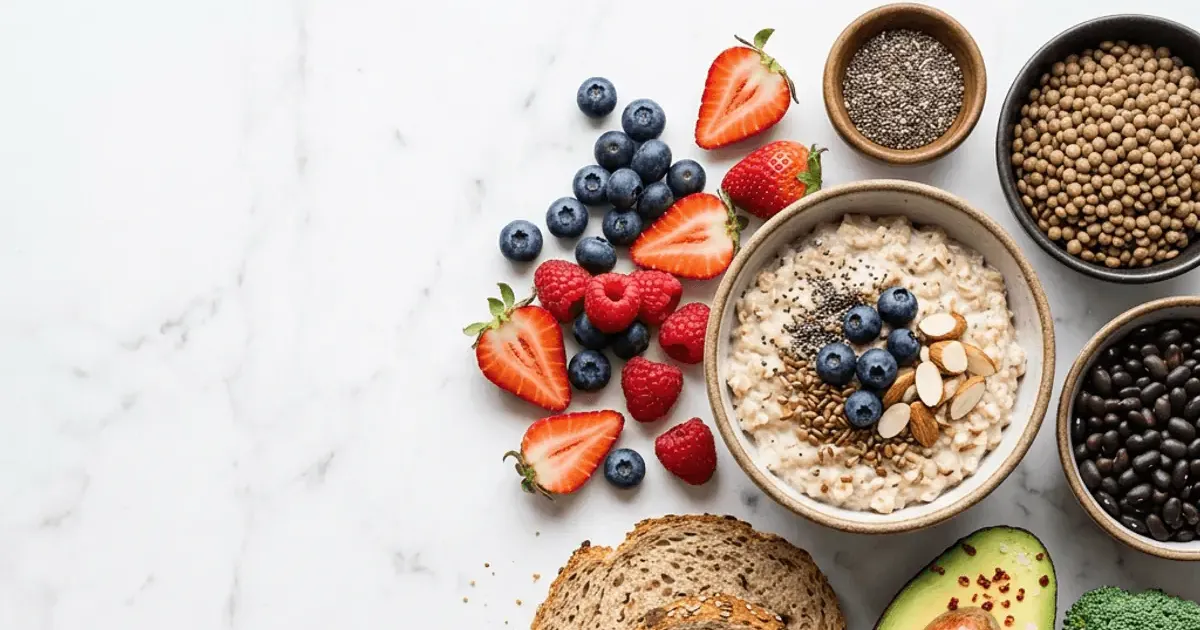
| Oats (rolled, cooked) | 1 cup | 4 g | Breakfast oatmeal with fruit and seeds |
| Broccoli (cooked) | 1 cup | 5 g | Steam, roast, or add to stir fry |
| Apple (with skin) | 1 medium | 4.4 g | Eat whole, slice with nut butter |
| Almonds | 1 oz (23 nuts) | 3.5 g | Snack, add to trail mix or oatmeal |
| Whole wheat bread | 2 slices | 4 g | Swap white bread for whole grain |
| Quinoa (cooked) | 1 cup | 5 g | Use as a base instead of white rice |
| Popcorn (air popped) | 3 cups | 3.5 g | A genuinely useful high-fiber snack |
Soluble Fiber vs. Insoluble Fiber
Not all fiber works the same way. The two main types have different mechanisms and health effects.
| Soluble Fiber | Insoluble Fiber | |
|---|---|---|
| Definition | Dissolves in water to form a viscous gel | Does not dissolve; remains largely intact |
| Main function | Slows digestion; feeds gut bacteria | Adds bulk to stool; speeds transit time |
| Key food sources | Oats, barley, apples, citrus, beans, lentils, psyllium | Whole wheat bran, vegetables, nuts, seeds, potato skins |
| Primary benefits | Lowers LDL cholesterol; improves blood sugar control; supports gut microbiome | Relieves constipation; promotes regularity |
| Supplement form | Psyllium husk, inulin, partially hydrolyzed guar gum | Wheat bran, cellulose supplements |
Most whole plant foods contain both types in varying ratios. You do not need to track each type separately — eating a variety of fruits, vegetables, legumes, and whole grains naturally provides a mix of both.
How to Start Fibermaxxing Safely
If your current fiber intake is around the U.S. average of 15 grams per day, do not jump to 40 grams overnight. A gradual increase over 2–4 weeks gives your digestive system time to adapt and your gut microbiome time to shift.
Week 1–2: Small additions
- Add a handful of berries to your morning oatmeal.
- Swap white rice for brown rice or quinoa at one meal.
- Add a tablespoon of chia seeds to yogurt or a smoothie.
- Target an increase of 3–5 grams per day from your current baseline.
Week 3–4: Layer in legumes
- Add a quarter cup of beans or lentils to at least one meal each day.
- Increase vegetable portions at lunch and dinner.
- Try whole grain bread if you currently use white bread.
- Target an additional 3–5 grams per day.
Ongoing principles:
- Spread fiber across all meals rather than loading it into one sitting.
- Combine different fiber sources — soluble and insoluble — across the day.
- Drink water consistently. A minimum of 6–8 cups (48–64 oz) per day is a reasonable baseline, and more if you are physically active.
- Monitor how your digestion responds and adjust intake based on tolerance.
- Avoid relying primarily on fiber supplements or processed “high-fiber” bars. Whole foods provide additional nutrients that supplements do not.
Use the Water Intake Calculator from Asterisks Fit to estimate how much fluid you need based on your body weight and activity level.
Example High-Fiber Day of Eating
This is a realistic sample day that reaches approximately 35–50 grams of fiber without being extreme or removing any major food group.
| Meal | Foods | Calories | Protein | Fiber |
|---|---|---|---|---|
| Breakfast | Rolled oats with mixed berries, 1 tbsp chia seeds, handful of almonds | ~480 kcal | 16 g | ~14 g |
| Morning snack | Apple with 2 tbsp almond butter | ~250 kcal | 6 g | ~6 g |
| Lunch | Large salad with half cup chickpeas, avocado, cucumber, cherry tomatoes, olive oil dressing + 2 slices whole wheat bread | ~600 kcal | 22 g | ~12 g |
| Afternoon snack | 3 cups air-popped popcorn | ~110 kcal | 3 g | ~3.5 g |
| Dinner | Lentil soup with spinach and a whole grain roll | ~560 kcal | 24 g | ~14 g |
| Daily total | ~2,000 kcal | ~71 g | ~49.5 g |
Note: This sample day is on the higher end of fiber intake and is appropriate for someone who has been increasing intake gradually. If you are starting from 15 grams per day, use this as a long-term direction, not a day-one target.
Fiber Supplements vs. Whole Foods
Supplements can be a useful bridge, but they are not a replacement for whole food sources.
| Supplement | Main Fiber Type | Potential Benefit | Limitations |
|---|---|---|---|
| Psyllium husk | Mostly soluble | Good evidence for cholesterol and blood sugar; well tolerated | Can interact with medication timing; requires water |
| Inulin | Soluble (prebiotic) | Feeds beneficial bacteria | Can cause significant gas and bloating |
| Wheat bran | Mostly insoluble | Effective for constipation relief | Limited nutritional value beyond fiber |
| Fiber gummies | Varies | Convenient | Often contain added sugars; lower fiber per dose |
| Fiber powders (mixed) | Varies | Easy to add to food | Quality varies widely by brand |
| Whole plant foods | Both types | Full spectrum of vitamins, minerals, polyphenols, and protein | Requires meal planning and preparation |
If you take prescription medications — especially thyroid medications, diabetes medications, or blood thinners — speak with your pharmacist or physician before adding fiber supplements. Psyllium and other soluble fibers can reduce the absorption of some medications when taken at the same time.
Who Should Be Careful With High-Fiber Diets?
Most healthy adults can safely increase dietary fiber by following the gradual approach described above. However, certain people should seek professional guidance first:
- People with inflammatory bowel disease (Crohn’s disease or ulcerative colitis) or irritable bowel syndrome may need individualized guidance, as high-fiber or high-FODMAP diets can worsen symptoms for some individuals.
- People who have recently had abdominal or intestinal surgery may be on a low-fiber or low-residue diet during recovery.
- People taking multiple medications should check with a pharmacist about fiber’s potential effect on drug absorption timing.
- People whose doctor has prescribed a low-fiber diet for a specific medical reason should follow that advice rather than a general guideline.
If you are unsure whether increasing fiber is appropriate for your situation, a registered dietitian is the right professional to consult.
Common Fibermaxxing Mistakes
Increasing fiber too quickly. The most common cause of bloating, gas, and abdominal discomfort. Add 3–5 grams per day over 2–4 weeks, not 20 grams overnight.
Ignoring hydration. Fiber needs water to do its job. Increasing fiber without increasing fluids can cause constipation rather than prevent it.
Depending on processed “high-fiber” snacks. Fortified bars and cereals with added inulin or chicory root fiber can cause digestive discomfort disproportionate to their fiber content. Whole foods are more reliably tolerated.
Treating fiber as a weight-loss shortcut. Fiber supports satiety and dietary quality, but it does not override total calorie intake. Weight management still requires a sustained calorie deficit.
Eating the same fiber source repeatedly. Diversity matters for gut microbiome health. Rotating between legumes, whole grains, fruits, and vegetables provides a wider range of prebiotic substrates.
Ignoring digestive symptoms. Persistent bloating, cramping, or changes in bowel habits that do not resolve after 2–3 weeks of gradual adaptation are worth discussing with a healthcare provider.
Taking excessive supplements. More is not always better. Very high supplemental fiber intake can interfere with mineral absorption and medication efficacy.
Is Fibermaxxing Worth Trying?
Yes — with the word “maxxing” kept in perspective.
Most American adults are significantly under-eating fiber. Moving toward the recommended 25–38 grams per day through whole plant foods is one of the most well-supported dietary changes you can make for digestive health, satiety, blood sugar control, heart health, and gut microbiome diversity.
What is not necessary is chasing 60 or 80 grams per day, relying exclusively on fiber supplements, or treating fiber as a single-variable solution to complex health goals.
The version of fibermaxxing worth adopting: eat a varied diet built around whole plant foods — vegetables, legumes, whole grains, fruits, nuts, and seeds — drink enough water, increase your intake gradually, and monitor how your body responds.
That is not a trend. It is solid nutrition advice that has been supported by research for decades.
Frequently Asked Questions
What does fibermaxxing mean?
Fibermaxxing is a social-media wellness trend that involves deliberately maximizing dietary fiber intake, usually by building meals around high-fiber whole foods such as legumes, vegetables, whole grains, fruits, nuts, and seeds. The term also appears as “fibremaxxing” (the British spelling).
Is fibermaxxing good for weight loss?
Eating enough fiber can support weight management by increasing satiety and improving overall dietary quality, which makes it easier to maintain a calorie deficit. Fiber does not directly burn fat, and it does not override total calorie intake. Use a Calorie Deficit Calculator alongside dietary changes for a more complete picture.
How much fiber should I eat per day?
Current guidance from the Dietary Guidelines for Americans recommends 25 grams per day for women and 38 grams per day for men aged 19–50. For adults over 50, the targets are 21 g (women) and 30 g (men). A useful general rule is 14 grams per 1,000 calories consumed.
Can eating too much fiber cause constipation?
Yes. Fiber requires adequate water to move through the digestive tract. If you increase fiber significantly without drinking more fluids, the extra bulk can become dry and difficult to pass. Always increase water intake alongside fiber.
How quickly should I increase fiber?
A gradual increase of 3–5 grams per day over 2–4 weeks is the safest approach for most people. Jumping from 15 grams to 40 grams overnight is the most common cause of digestive discomfort among people trying fibermaxxing for the first time.
What foods have the most fiber?
Split peas and lentils (around 15–16 g per cooked cup) and black beans and chickpeas (12–15 g per cooked cup) are among the highest-fiber options. Avocado (about 10 g per medium fruit) and chia seeds (about 10 g per ounce) are excellent choices outside of legumes.
Is fiber powder as good as food?
Fiber supplements can be useful for reaching daily targets, but they lack the vitamins, minerals, polyphenols, and protein found in whole food sources. Psyllium husk has the best research support among supplements, but it should supplement a fiber-rich diet, not replace it.
Does fiber help with protein digestion?
Fiber does not directly aid protein digestion, but a high-fiber meal pattern can slow gastric emptying, which may reduce rapid swings in hunger and improve the satiety provided by protein-containing meals. The two nutrients work well together.
Can I eat 50 grams of fiber per day?
Some people do, and there is no established upper limit for fiber from whole food sources. However, if you are currently eating 15 grams per day, jumping to 50 grams would likely cause significant discomfort. Build up gradually over several weeks. Most people find a range of 25–45 grams per day manageable and beneficial.
Should I drink more water when increasing fiber?
Yes. As a baseline, most adults should drink at least 6–8 cups of water per day, and more when increasing fiber intake. Fiber absorbs water in the digestive tract, and inadequate hydration can lead to constipation. The Water Intake Calculator at Asterisks Fit can help you estimate your daily fluid needs.
Fibermaxx slowly or regret it by Thursday
The trend says “eat 40-50g of fiber”; your gut says “not this week.” Add 5g at a time — one extra katori of dal, one fruit, one bowl of oats — and hold each level for four or five days before adding more. Drink more water as you climb or the fiber works against you. Indian diets have a head start here (dal, rajma, chana, sabzi are fiber machines), so most people need to add less than the influencers claim. Past 45g a day, you’re collecting bathroom stories, not benefits.
Treat “daily fiber intake” as a working rule. Revise it only from results.
Sources and References
-
USDA Dietary Guidelines for Americans 2020–2025. U.S. Department of Agriculture and U.S. Department of Health and Human Services. https://www.dietaryguidelines.gov — Supports daily fiber recommendations and average American intake data.
-
National Academies of Medicine (Institute of Medicine). Dietary Reference Intakes for Energy, Carbohydrate, Fiber, Fat, Fatty Acids, Cholesterol, Protein, and Amino Acids (2005). National Academies Press. — Supports the 14 g/1,000 kcal fiber recommendation and sex/age-based targets.
-
Mayo Clinic. “Dietary fiber: Essential for a healthy diet.” https://www.mayoclinic.org — Supports guidance on types of fiber, food sources, and gradual intake increases.
-
Harvard T.H. Chan School of Public Health — The Nutrition Source. “Fiber.” https://www.hsph.harvard.edu/nutritionsource/carbohydrates/fiber/ — Supports benefits for cholesterol, blood sugar, and cardiovascular health.
-
Slavin J. “Dietary fiber and body weight.” Nutrition. 2005;21(3):411–418. https://pubmed.ncbi.nlm.nih.gov/15797686/ — Supports satiety and weight management effects.
-
U.S. Food and Drug Administration. Health claim notification for oat beta-glucan and reduced risk of coronary heart disease. FDA.gov. — Supports the beta-glucan/LDL cholesterol health claim.
-
USDA FoodData Central. U.S. Department of Agriculture. https://fdc.nal.usda.gov — Source for all fiber content values in the high-fiber foods table.
-
Cleveland Clinic. “Why You Need More Fiber in Your Diet.” Cleveland Clinic Health Essentials. https://health.clevelandclinic.org — Supports practical guidance on fiber intake and average American consumption figures.