

Nutrition for Fitness: A Beginner's Eating Guide
A beginner's guide to eating for fitness: protein, carbs, fats, portion basics and simple Indian meal examples that support training.
Key Takeaways & Summary
A beginner's guide to eating for fitness: protein, carbs, fats, portion basics and simple Indian meal examples that support training.
You’ve probably heard the saying, “You can’t out-exercise a bad diet.” It’s true. No matter how hard you work out, if your nutrition isn’t on point, you won’t see the results you want.
If “nutrition for gym beginners” brought you here, start with practical steps.
The Three Macronutrients
All foods contain three macronutrients: protein, carbohydrates, and fat. Each plays a crucial role in your fitness goals.
Protein
Protein is the building block of muscle. When you exercise, you create micro-tears in your muscle fibers. Protein repairs these tears and builds them back stronger.
Daily Protein Target: 0.8-1g per pound of body weight
Best Sources:
- Chicken breast
- Fish (salmon, tuna)
- Eggs
- Greek yogurt
- Cottage cheese
- Lean beef
- Legumes (beans, lentils)
- Tofu
Carbohydrates
Carbs are your body’s primary energy source. They fuel your workouts and help with recovery.
Types of Carbs:
- Simple Carbs: Quickly absorbed, good around workouts (white rice, white bread, fruit)
- Complex Carbs: Slowly absorbed, good for sustained energy (oats, brown rice, sweet potatoes)
Daily Carb Target: 2-3g per pound of body weight (adjust based on activity level)
Fat
Fat is essential for hormone production and overall health. Don’t fear fat; just choose the right kinds.
Healthy Fats:
- Avocado
- Nuts and seeds
- Olive oil
- Fatty fish (salmon, mackerel)
- Coconut oil
Daily Fat Target: 0.3-0.5g per pound of body weight
Meal Timing
While total daily calories and macros matter most, meal timing can help optimize your results.
Pre-Workout (1-2 hours before): Eat a meal with carbs and protein. This provides energy and prevents muscle breakdown. Example: Chicken with rice, or toast with peanut butter
Post-Workout (within 2 hours): Eat a meal with protein and carbs. This helps with recovery and muscle growth. Example: Protein shake with banana, or fish with sweet potato
Run a One-Week Nutrition Check
Exercise does not automatically offset a high energy intake. Record normal meals, snacks, drinks, and cooking fats for one week without trying to create a perfect log.
Use the record to identify practical changes such as a more consistent protein source, additional fruit or vegetables, or a smaller portion of calorie-dense extras. Reassess energy, training, and weight trends over several weeks instead of promising a fixed result.
Practical Meal Ideas
Breakfast:
- Oatmeal with berries and almonds
- Eggs with whole wheat toast
- Greek yogurt with granola
Lunch:
- Grilled chicken with brown rice and broccoli
- Tuna sandwich on whole wheat bread
- Lentil soup with a side salad
Dinner:
- Salmon with sweet potato and asparagus
- Lean ground beef with pasta and marinara
- Tofu stir-fry with vegetables
Snacks:
- Apple with peanut butter
- Protein bar
- Mixed nuts
- Greek yogurt
Supplements: Do You Need Them?
The most important supplements are:
- Whey Protein: Convenient way to get protein if you can’t eat enough whole foods
- Creatine: Increases strength and muscle size
- Multivitamin: Fills nutritional gaps
Most other supplements aren’t necessary if you’re eating well.
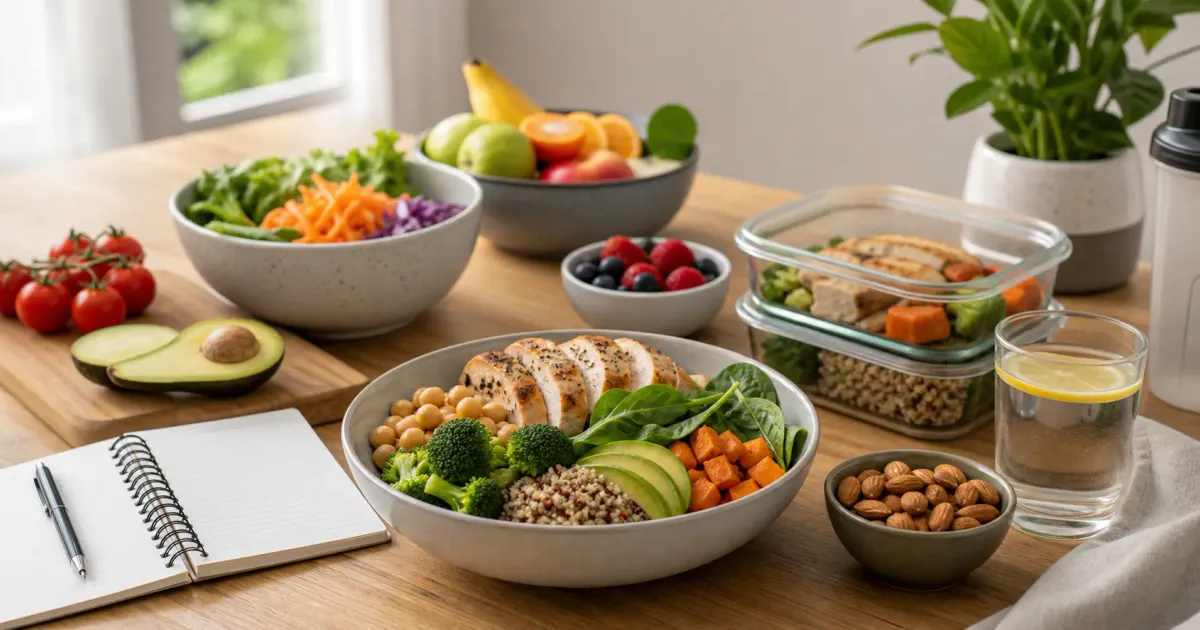
The plate method that skips the math
Before macros and apps, run the visual audit: half the plate vegetables and salad, a quarter protein (dal, paneer, eggs, chicken), a quarter carbs (rice, roti), and a thumb of fat (the ghee already in the sabzi counts). That single template at three meals covers 90% of what a beginner’s training actually requires — no weighing scale, no app subscriptions, no forbidden foods. Count nothing for the first three months; upgrade to tracking only when progress stalls and you need to find out why. Most people never need to. The plate was the spreadsheet all along.
Revisit “nutrition for gym beginners” when new data arrives.