

Proteinmaxxing: How Much Protein Do You Really Need?
Before you chase a bigger protein number, learn the realistic targets, meal examples, supplement mistakes, and warning signs that matter.
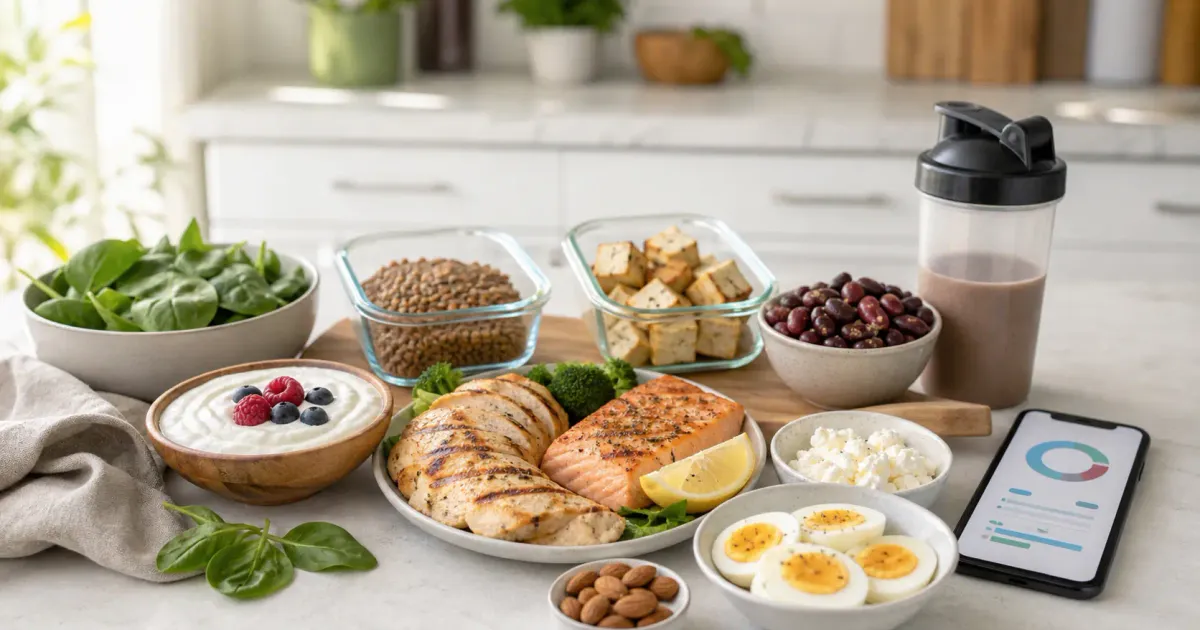
Key Takeaways & Summary
Before you chase a bigger protein number, learn the realistic targets, meal examples, supplement mistakes, and warning signs that matter.
Macro & Recipe Nutrition Calculator
Calculate calories, protein, carbs, and fat per serving for home recipes.
Proteinmaxxing sounds like a joke until you look at what is happening in normal supermarkets. Protein cereal, protein yoghurt, protein coffee, protein crisps, protein brownies, protein pasta, protein ice cream. In the US and UK, the word “protein” has moved from the back of the nutrition label to the front of the packet.
People researching “how much protein per day” need a testable baseline. Skip rigid rules.
There is a useful idea underneath the noise. Many people start the day with a low-protein breakfast, grab a light lunch, then feel unusually hungry by late afternoon. Others begin strength training, cut calories, or start a weight-loss medication and suddenly realise their usual meals do not give them much to work with. In those cases, paying attention to protein can make food feel steadier.
The mistake is treating protein like a scoreboard. A good day is not the day with the highest number. A good day is the day where protein supports the rest of your life: your training, your appetite, your digestion, your energy, your budget, and the meals you actually want to eat.
This guide keeps the useful part of proteinmaxxing and leaves the weird part alone.
Nutrition disclaimer: This article is for general education only. It is not medical advice. Speak with a qualified clinician or registered dietitian before making major diet changes, especially if you have kidney disease, liver disease, diabetes, a history of eating disorders, are pregnant, or use prescription weight-loss medication.
New protein products are part of why this topic keeps spreading. If your feed is full of fizzy high-protein drinks, read our protein soda and clear protein guide before you treat a front-label protein number like a complete nutrition plan.
For Indian meals, use this page as the target-setting guide and pair it with practical food pages: vegetarian protein options in India, Indian high-protein tiffin ideas, and Indian thali calories. That cluster is where the audit shows the clearest India-specific advantage.
Why this trend took off
The protein trend is not coming from one place. It is a pile-up of several changes at once.
Strength training is more mainstream now. Plenty of people who do not identify as bodybuilders still care about muscle, posture, ageing, bone health, and looking better in clothes. Protein naturally enters that conversation because lifting gives the body a reason to repair and build tissue.
Weight-loss drugs also changed the conversation. Some people using GLP-1 medicines have much lower appetite, which can make it harder to eat enough total food. That does not mean everyone on these medicines needs shakes, but it does explain why protein, muscle retention, and meal quality are getting more attention.
Food companies noticed the demand. Some high-protein products are useful. A Greek yoghurt with 20 grams of protein can be a simple breakfast. A ready-to-drink shake can help during a commute. But a cookie does not become a health food just because the packet says protein.
So the question is not “Is proteinmaxxing good or bad?” The better question is: what problem are you trying to solve?
If the problem is “I snack all night because lunch was tiny,” protein may help. If the problem is “I want to build muscle while training consistently,” protein matters. If the problem is “I feel pressured to turn every meal into a maths lesson,” more protein content will probably make the problem worse.
Start with enough, not maximum
For general adult nutrition, the baseline protein recommendation is much lower than the numbers you see in fitness videos. In the UK, the British Nutrition Foundation lists adult protein needs around 0.75 grams per kilogram of body weight per day. In the US, the classic adult RDA is close to 0.8 grams per kilogram per day.
Those numbers are minimum-style public health targets, not personalised muscle-building plans. Active people often need more.
For many US and UK adults who train a few days per week, a sensible middle range is:
| Person or goal | Practical daily protein range |
|---|---|
| General health, not very active | 0.75 to 1.0 g/kg/day |
| Active lifestyle or beginner strength training | 1.2 to 1.6 g/kg/day |
| Consistent lifting, muscle gain, or fat loss phase | 1.4 to 2.0 g/kg/day |
| Medical conditions, pregnancy, older age, or medication changes | Get individual advice |
That means a 70 kg person might start around 85 to 110 grams per day if they are active. A 90 kg person might start around 110 to 145 grams. In pounds, divide body weight by 2.2 to estimate kilograms. A 165 lb person is about 75 kg.
This is where the trend often goes wrong. Someone hears that protein is useful, jumps from 70 grams to 190 grams overnight, buys three powders, eats fewer vegetables, and then wonders why their digestion is off. The better move is to find the first target that actually improves your meals.
Protein per kg chart
Use this as a quick estimate, then check the number with the Protein Calculator.
| Body weight | General health | Fat loss or training | Muscle gain |
|---|---|---|---|
| 60 kg | 48-60 g | 84-108 g | 96-132 g |
| 70 kg | 56-70 g | 98-126 g | 112-154 g |
| 80 kg | 64-80 g | 112-144 g | 128-176 g |
| 90 kg | 72-90 g | 126-162 g | 144-198 g |
| 100 kg | 80-100 g | 140-180 g | 160-220 g |
If the high end looks hard, do not force it on day one. Start with the lowest target that improves hunger, recovery, and meal quality. The Protein Per Meal Calculator can split the daily number into breakfast, lunch, dinner, and snacks.
The easiest fix is usually breakfast
Most people do not need a complete diet rebuild. They need one meal to stop being a placeholder.
A typical low-protein breakfast might be toast and jam, cereal with a little milk, a pastry, or just coffee. None of those foods are morally bad. They just may not hold you for long, especially if you train, walk a lot, commute, or work a long shift.
Try making breakfast look like one of these:
- Greek yoghurt or skyr with oats, berries, and nuts
- Two or three eggs with toast and fruit
- Cottage cheese with sliced banana and peanut butter
- Tofu scramble with toast and tomatoes
- Overnight oats made with milk or soy milk plus a scoop of protein if needed
- Smoked salmon or tuna on toast with salad on the side
- Beans on toast with an extra egg or grated cheese
The target does not have to be perfect. If breakfast moves from 8 grams of protein to 25 grams, you will probably feel the difference.
Lunch should not be a sad salad
The classic “trying to be healthy” lunch is a salad that looks good for five minutes and then disappears inside your stomach like it never happened. Leaves, cucumber, a few tomatoes, and dressing are not a meal for most adults. Add protein and carbohydrates, and suddenly the same lunch becomes useful.
Better lunch anchors:
- chicken, turkey, tuna, salmon, sardines, or lean beef
- tofu, tempeh, edamame, lentils, chickpeas, beans, or seitan
- eggs, cottage cheese, Greek yoghurt, paneer, or reduced-fat cheese
- leftover chilli, curry, stir-fry, roast dinner, or pasta with a clear protein source
Then add something that gives the meal body: potatoes, rice, wholegrain bread, pasta, wraps, oats, fruit, or beans. People often remove carbohydrates when they start chasing protein, then wonder why workouts feel flat. Protein repairs. Carbohydrates help fuel.
A decent lunch can be simple: tuna jacket potato, chicken burrito bowl, tofu rice bowl, lentil soup with bread, turkey sandwich with fruit, or chickpea salad with feta and couscous. None of this needs to look like a fitness influencer made it.
Protein powder is useful when it solves a real problem
Protein powder is neither magic nor nonsense. It is powdered convenience.
It can help when you are short on time, when appetite is low, when you travel, when breakfast is hard, or when vegetarian and vegan meals need a simple boost. It can also be useful after training if your next real meal is hours away.
It is less useful when it replaces meals you would rather eat, when it pushes calories above your target, or when the product is mostly a dessert with a small protein halo. A shake is not automatically better than eggs on toast. A bar is not automatically better than yoghurt and fruit.
If you use powder, keep the decision boring:
- choose a product with roughly 20 to 30 grams of protein per serving
- check calories if weight loss is the goal
- choose whey isolate or lactose-free options if regular whey upsets your stomach
- use soy, pea, rice, or blended plant proteins if you avoid dairy
- athletes in tested sports should look for third-party testing
The best supplement is the one you forget about because it quietly makes the day easier.
Build meals around “protein plus”
The phrase “high protein” is incomplete. High protein plus what?
Protein plus fiber is usually better than protein alone. Protein plus vegetables is better than a shake and no lunch. Protein plus carbohydrates helps training. Protein plus enough dietary fat makes meals more satisfying.
Use this plate when you do not want to track every gram:
- one palm-sized serving of protein
- one fist of vegetables or fruit, preferably more
- one cupped-hand serving of rice, potatoes, pasta, oats, bread, beans, or another carbohydrate
- one small serving of fats such as olive oil, avocado, nuts, seeds, cheese, or oily fish
For fat loss, portions may be smaller. For muscle gain, portions may be larger. The structure stays the same.
If you do track, track for a week and learn. You do not have to turn food into a permanent spreadsheet.
The training part still matters
Protein without resistance training is like buying building materials and never opening the toolbox. You may still benefit from better satiety and nutrition, but muscle growth needs a training signal.
The long-term public health target is not extreme. US and UK guidance both point adults toward regular aerobic activity and muscle-strengthening work at least two days per week. That can be gym training, dumbbells at home, resistance bands, bodyweight exercises, Pilates, heavy gardening, or carrying heavy shopping. The body mainly cares that the muscles are challenged in a progressive way.
For beginners, two full-body sessions per week are enough to start:
- squat or leg press
- hinge movement such as Romanian deadlift or hip thrust
- push-up, bench press, or chest press
- row or lat pulldown
- carry, plank, or dead bug
Do that consistently, eat enough protein, sleep decently, and the trend becomes a normal routine instead of a social media project.
Common mistakes that make proteinmaxxing feel worse
The first mistake is chasing the biggest number. If 120 grams works for your body, budget, and appetite, forcing 180 grams may add nothing except stress.
The second mistake is forgetting fiber. A diet can be high-protein and still poor quality if fruit, vegetables, beans, lentils, oats, potatoes, and whole grains disappear. Constipation is not a badge of discipline.
The third mistake is using protein labels as permission to ignore the rest of the food. A protein brownie can be fine. It is still a brownie. A protein cereal can be convenient. It may still be expensive cereal.
The fourth mistake is starting too aggressively. Add one protein anchor at breakfast or lunch before rebuilding the entire kitchen.
The fifth mistake is copying athletes while living a non-athlete life. A 22-year-old lifter training hard five days per week has different needs from a busy parent trying to walk more and lift twice a week.
A realistic day of eating
Here is what a normal high-protein day can look like without becoming strange.
Breakfast: Greek yoghurt, oats, berries, and walnuts. Coffee if you want it.
Lunch: Chicken or tofu wrap with salad, hummus, and fruit.
Snack: Cottage cheese, skyr, edamame, or a protein shake if the day is busy.
Dinner: Salmon, turkey chilli, lentil curry, lean beef stir-fry, paneer, or tempeh with rice or potatoes and vegetables.
Evening: If you are still hungry, have something deliberate rather than grazing: yoghurt, fruit, toast with peanut butter, milk, or a small bowl of cereal.
That day can land around 100 to 140 grams of protein depending on portions. It also still looks like food.
The number that ends the debate
For anyone training 3-5 days a week, 1.6-2.2g per kg of body weight covers muscle growth — that’s 112-154g for a 70kg lifter, and going past it buys nothing except expensive urine. The proteinmaxxing crowd isn’t wrong that most Indians undereat protein; a typical veg thali day lands under 50g. They’re wrong about the fix being 250g and six shakes. Hit your number from food first, use one scoop of whey as a gap-filler, and spend the saved money on… actual food.
That is the practical takeaway behind “how much protein per day”: start sensibly, then adjust from evidence.
Sources: protein guidance and research reviewed
- Current trend context: The Guardian, coverage of the 2026 whey and proteinmaxxing boom.
- UK protein guidance: British Nutrition Foundation, Protein.
- Sports nutrition evidence: Journal of the International Society of Sports Nutrition, Position Stand: protein and exercise.
- US activity guidance: CDC, Adult Activity: An Overview.
- UK activity guidance: NHS, Physical activity guidelines for adults aged 19 to 64.