

Recipe Calorie Calculator: Macros per Serving Made Easy
Calculate calories, protein, carbs and fat for a homemade recipe, divide the result by servings, and avoid raw-versus-cooked mistakes.
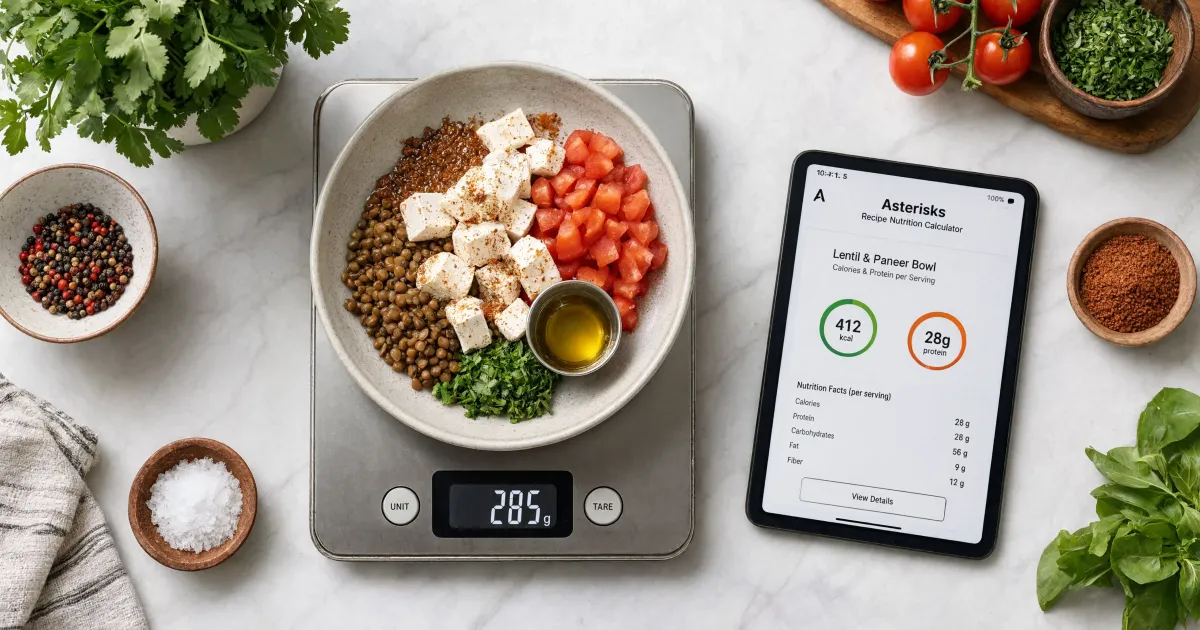
Key Takeaways & Summary
Calculate calories, protein, carbs and fat for a homemade recipe, divide the result by servings, and avoid raw-versus-cooked mistakes.
Steps to Calories & Distance Calculator
Convert daily step counts into miles, kilometers, and total calories burned.
A recipe nutrition calculator is useful when packaged-food labels do not match the meal you actually cooked. Homemade food depends on your ingredients, oil, portion size, and how many servings you divide the final dish into.
A good “recipe calorie calculator” answer creates one actionable step. Extra facts can wait.
Use the Recipe Nutrition Calculator when you know the ingredients. This guide explains the method behind the calculator so your calories and macros are easier to trust.
The basic formula
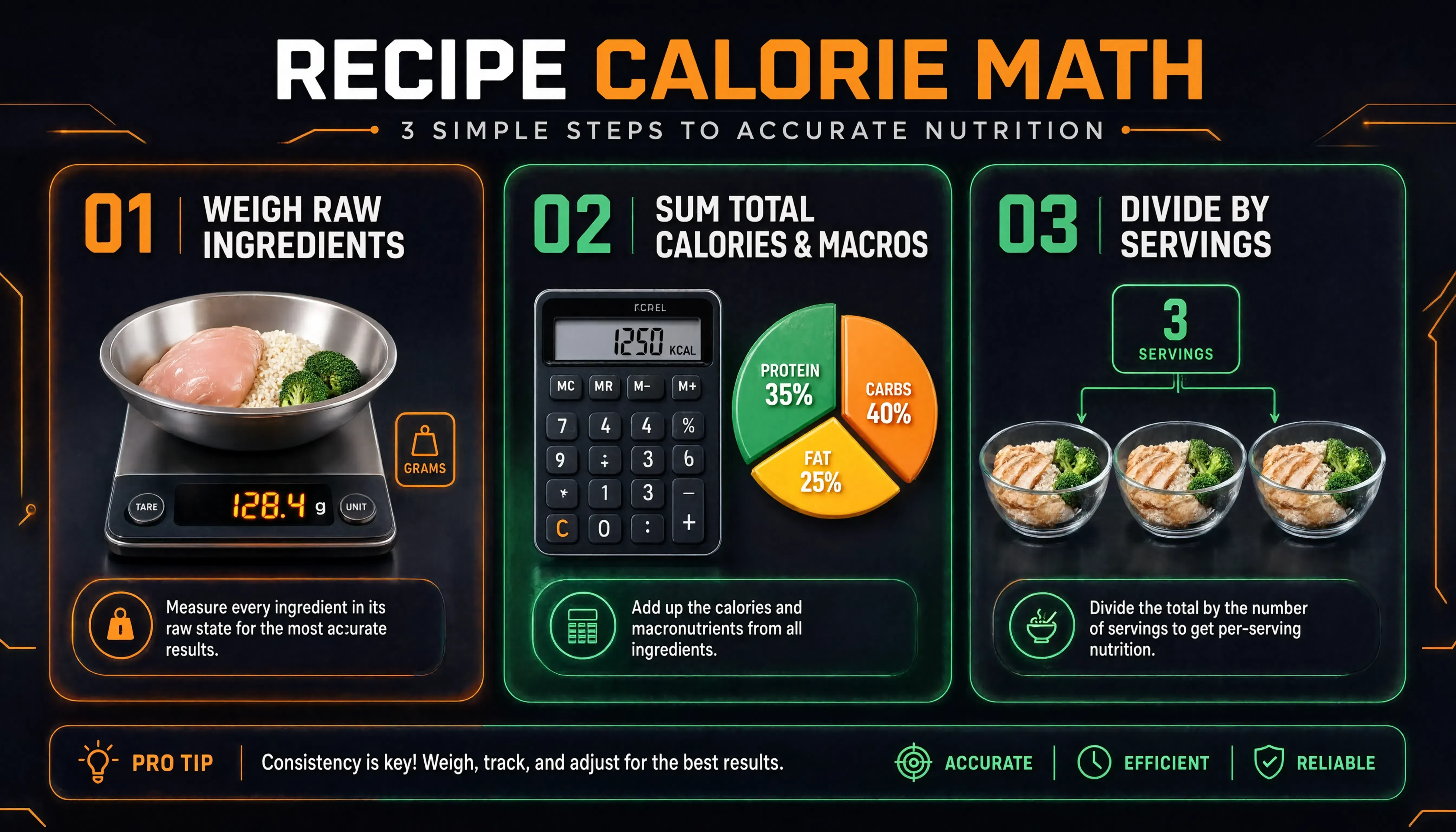
For a full recipe:
recipe calories = calories from all ingredients
calories per serving = recipe calories / number of servings
The same method works for protein, carbs, and fat:
protein per serving = total recipe protein / number of servings
carbs per serving = total recipe carbs / number of servings
fat per serving = total recipe fat / number of servings
Use raw ingredient weights when possible
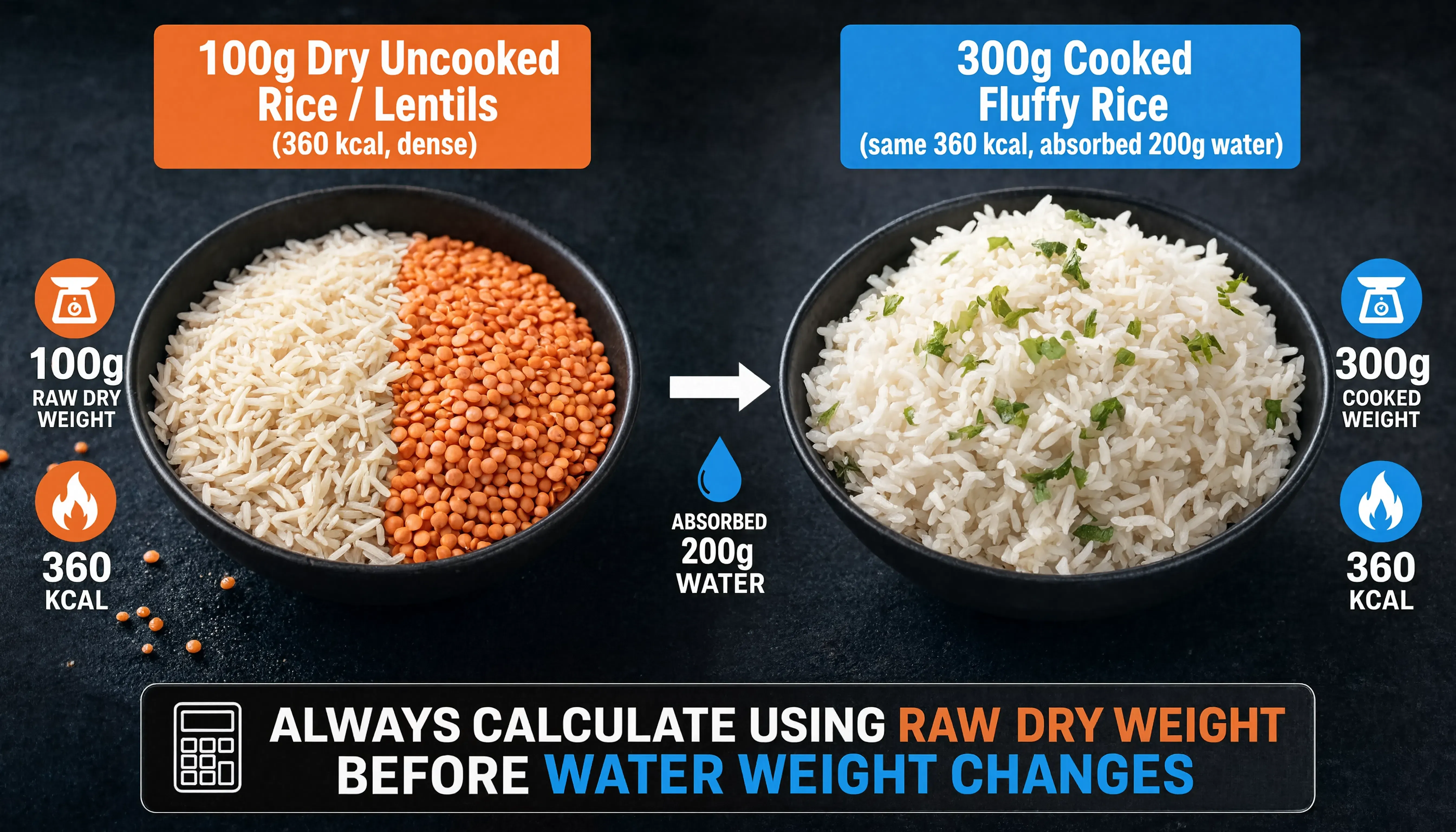
Raw weights are usually more reliable because cooked weight changes with water loss or water absorption. Rice, dal, pasta, vegetables, and meat can all change weight during cooking.
For example, 100 g raw dry rice does not equal 100 g cooked rice. Dry rice absorbs water and expands to nearly 300 g when cooked, but the calorie density remains tied strictly to the raw 100 g dry weight you started with.
Do not forget oil, ghee, sauces and toppings
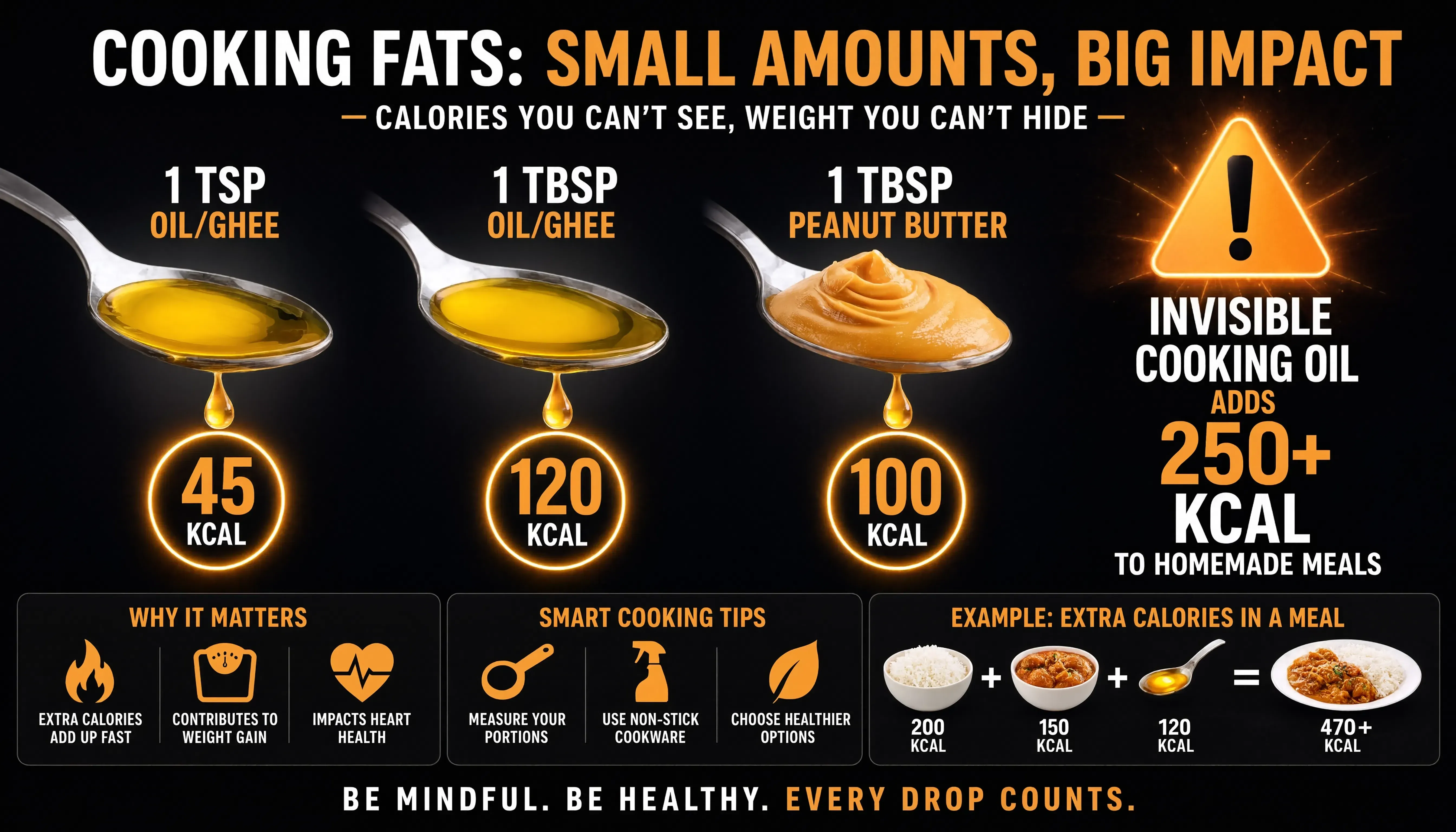
Small ingredients can drive a large part of the calorie total:
- 1 tsp oil or ghee: about 40 to 45 kcal
- 1 tbsp oil or ghee: about 120 kcal
- 1 tbsp peanut butter: often 90 to 100 kcal
- Sugar, jaggery, cream, nuts, cheese, and coconut: add up quickly.
If your recipe tastes rich, check the fat sources before assuming the main ingredient caused the calories.
Worked example
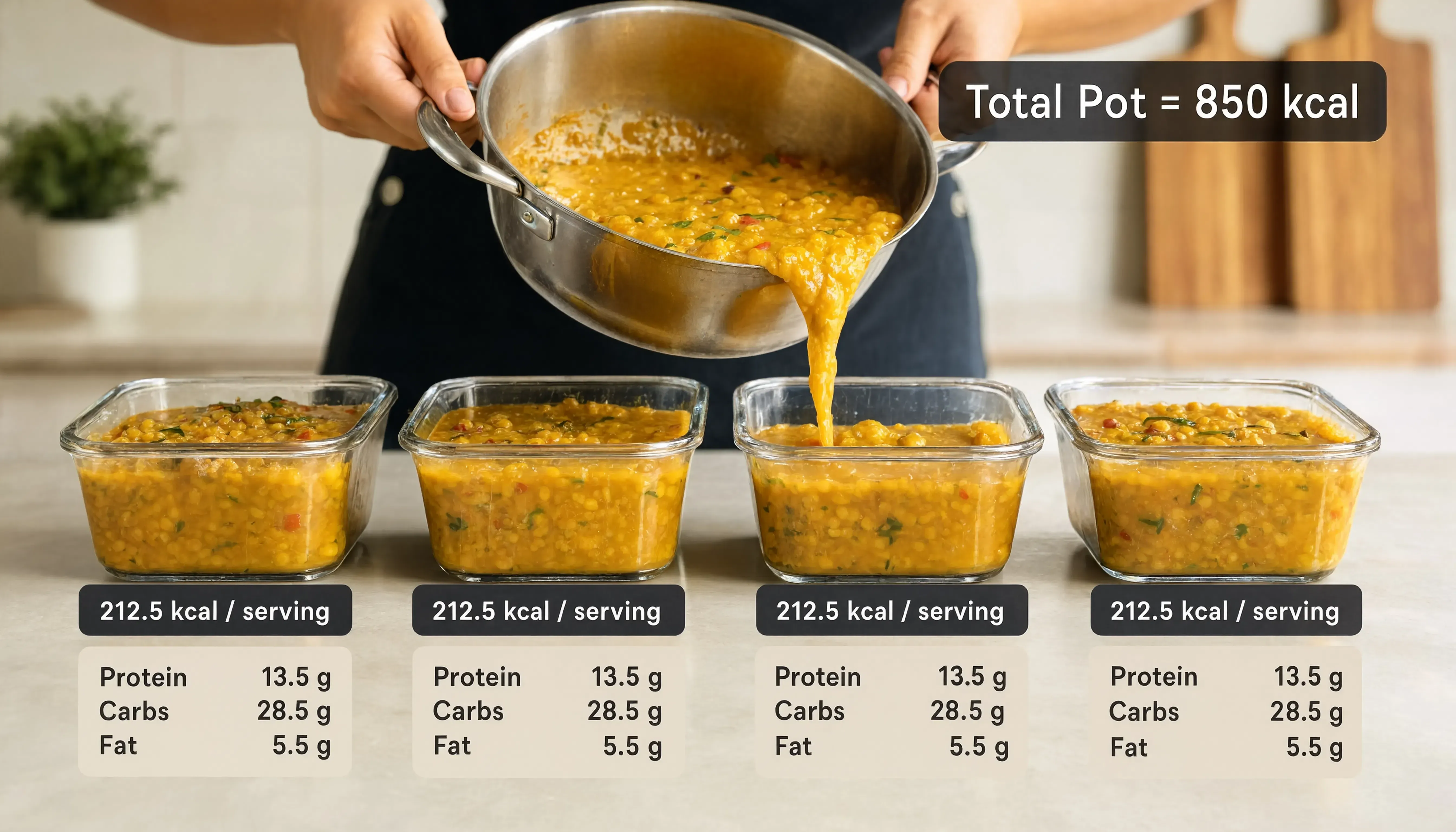
A homemade dal recipe uses:
- 200 g dry lentils
- 1 tbsp oil (tadka)
- onion, tomato, garlic, spices
- water and salt
If the full pot is about 850 kcal and you divide it into 4 equal servings:
850 / 4 = 212.5 kcal per servingIf you divide the same pot into 3 servings, each serving becomes about 283 kcal. The recipe did not change, but the serving size did.
Per serving versus per 100 g
Per serving is best when you eat the dish in fixed portions. Per 100 g is better when portions vary or when you weigh cooked food from a batch.
For meal prep, weigh the cooked final recipe once. If the finished food weighs 1,200 g and the recipe has 1,800 kcal:
1,800 / 1,200 = 1.5 kcal per gram
100 g serving = 150 kcal
Helpful calculators
- Recipe Nutrition Calculator — calculate recipe calories and macros per serving.
- Indian Food Calorie Calculator — estimate common Indian meals and portions.
- Macro Calculator — fit a recipe into your daily protein, carb, and fat plan.
Common mistakes to avoid
- Dividing by the number of people instead of the actual number of servings.
- Forgetting oil, ghee, cream, nuts, sugar, sauces, and toppings.
- Mixing raw and cooked weights in the same calculation.
- Using restaurant values for a lighter homemade recipe.
- Assuming one cup is always the same weight for every ingredient.
FAQs
Is recipe nutrition exact?
No. It is an estimate, but it can be useful when you measure ingredients consistently and divide the recipe honestly.
Should I weigh food before or after cooking?
Use raw weights for ingredients when building the recipe. Use cooked weight when dividing the final batch into portions.
How do I calculate macros for Indian recipes?
Add every ingredient, including oil and ghee, then divide by servings. For common dishes, the Indian food calculator can provide a faster starting estimate.
Sources
- USDA FoodData Central — ingredient-level calorie and nutrient reference data.
- FDA: Serving Size on the Nutrition Facts Label — how serving size changes the calories and nutrients consumed.
Calibrate the daal once, trust it forever
Home cooking resists calorie apps because “one katori of dal” spans 120-250 calories depending on the ghee hand. The fix is a one-time audit per staple recipe: weigh the raw ingredients once, total them through the calculator, divide by servings, save the number. Do it for your five house staples — the dal, the sabzi base, the rice portion, the roti, the poha — and 80% of your diet becomes pre-counted. Cooking oil is where whole plans quietly sink: every invisible tablespoon in the tadka is 120 calories the app never met.
Keep “recipe calorie calculator” practical. Avoid all-or-nothing targets.