

Strength Training After 30: 6 Movements for Longevity
A simple strength plan focused on muscle, joints, balance, and everyday ability for adults who want long-term fitness.
Key Takeaways & Summary
A simple strength plan focused on muscle, joints, balance, and everyday ability for adults who want long-term fitness.
Longevity training does not need to look futuristic. For most adults, the most useful plan is basic strength work done consistently.
After 30, the goal is not only looking fit. It is keeping muscle, protecting joints, carrying groceries, climbing stairs, getting off the floor, and staying capable for decades.
Train patterns, not random exercises
Build your week around these movements:
- Squat
- Hinge
- Push
- Pull
- Carry
- Rotate or resist rotation
These patterns cover most real-life movement. You can train them with dumbbells, machines, bands, barbells, or bodyweight.
The two-day minimum plan
If life is busy, start with two strength days:
Day A
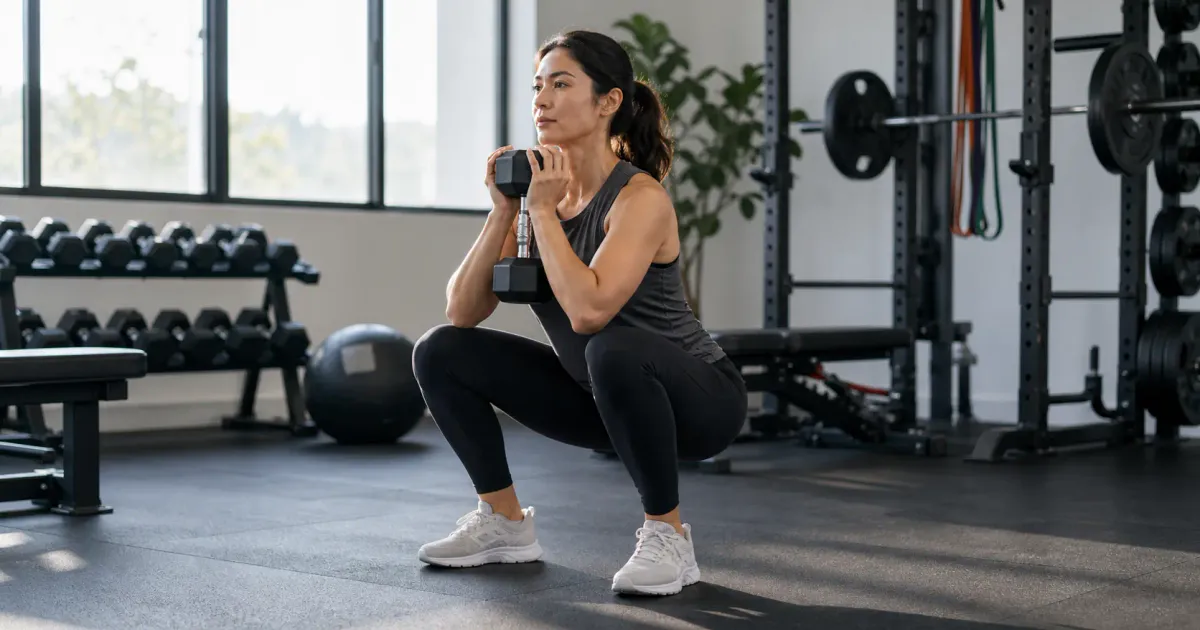
- Goblet squat: 3 sets of 8
- Push-up or chest press: 3 sets of 8 to 10
- Dumbbell row: 3 sets of 10 each side
- Farmer carry: 4 short walks
Day B
- Romanian deadlift: 3 sets of 8
- Step-up: 3 sets of 8 each leg
- Overhead press: 3 sets of 8
- Dead bug: 3 sets of 8 each side
This is not flashy, but it covers the essentials.
Add balance without making it weird
Balance training can be simple. Use step-ups, split squats, carries, and controlled single-leg work. These train strength and stability at the same time.
You do not need to stand on unstable surfaces to prove anything.
Keep some power
Power is the ability to move quickly. As people age, it matters. Beginners can start with low-risk options like brisk stair climbs, medicine ball throws, or fast-but-controlled bodyweight squats.
Keep reps low and form clean.
Progress slowly
Add weight when your reps are smooth. Stop sets with one or two good reps left. Longevity training should build you up, not leave you limping through the week.
Recovery counts
Muscle grows between sessions. Sleep, protein, hydration, and easier movement days are part of the plan.
The most useful strength program is not the hardest one. It is the one you can keep doing when work, family, and stress are all real.
Train for your 70s, starting Tuesday
The six movements that predict independent old age: squat (getting off chairs), hinge (picking things up), push, pull, carry (groceries, grandkids), and getting off the floor. Grip strength alone correlates with longevity strongly enough that researchers use it as a health marker — which is why farmer’s carries went from strongman oddity to 2026’s favorite finisher. Two sessions a week covering those patterns beats five days of mirror-driven bodybuilding for healthspan. You’re not training for this summer; you’re negotiating with your 75-year-old self.