

Indian Thali Calories: Full Plate Breakdown (Chart)
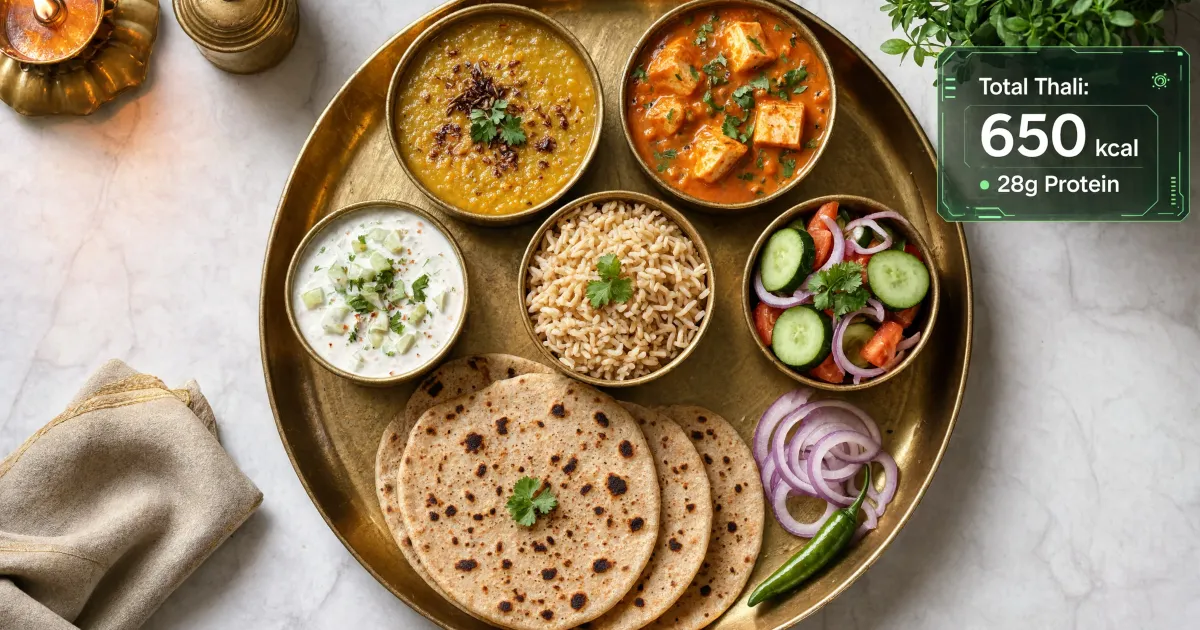
A thali can be light or calorie-heavy depending on portions, oil, sweets, and fried sides. See how the components add up.
Key Takeaways & Summary
A thali can be light or calorie-heavy depending on portions, oil, sweets, and fried sides. See how the components add up.
Steps to Calories & Distance Calculator
Convert daily step counts into miles, kilometers, and total calories burned.
People researching “indian thali calories” need a testable baseline. Skip rigid rules.
Estimating Indian thali calories component by component
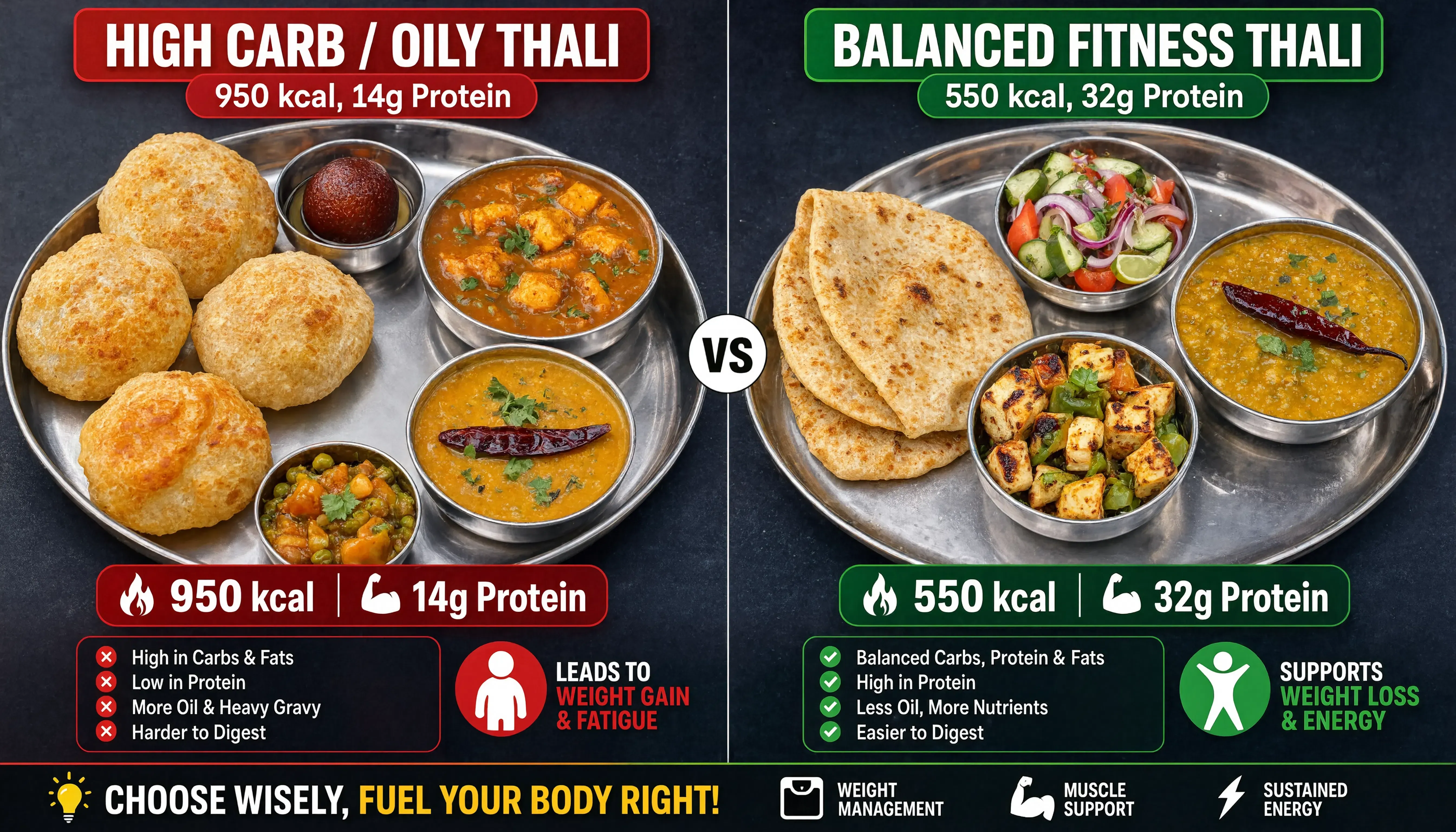
A thali is a meal plate made of several small dishes. The calories depend on the size of each item and whether the food is homemade or restaurant-prepared.
If you are using thali meals for a high-protein goal, read this with the proteinmaxxing guide, vegetarian protein guide for India, and Indian high-protein tiffin planner.
Core thali components
Roti
- one small roti: 80–110 kcal
- one medium roti: 110–140 kcal
Rice
- 1 small bowl cooked rice (120 g): 170–190 kcal
- 1 large bowl cooked rice (180 g): 250–270 kcal
Dal
- 1 cup dal: 180–230 kcal depending on lentil type and added fat
Sabzi
- 1 cup vegetable sabzi: 120–190 kcal depending on oil, potato, and coconut
Curd
- 1 small bowl plain curd (150 g): 90–100 kcal
Papad and pickle
- 1 papad: 40–70 kcal
- 1 tsp pickle: 10–15 kcal
Sweet
- small serving of dessert: 120–180 kcal
How oil changes the total
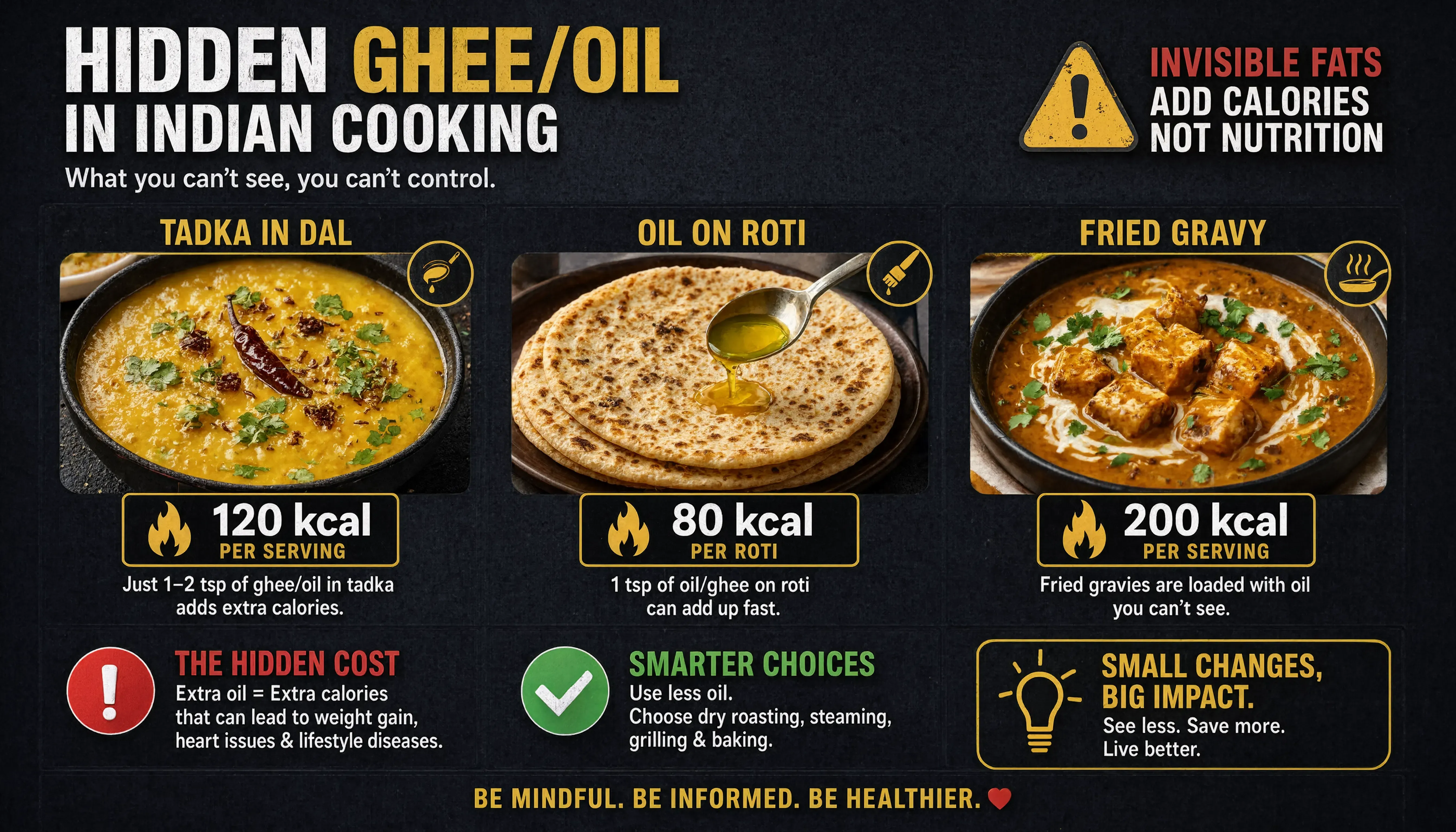
Oil and ghee often add 40–45 kcal per teaspoon. A thali with a richer curry or sabzi can be 150–250 kcal higher than a lighter home version.
Three realistic sample thalis
1. Lighter home thali
- 1 small roti: 90 kcal
- 1 small bowl cooked rice: 180 kcal
- 1 cup dal with 1 tsp oil: 200 kcal
- 1 cup mixed vegetable sabzi with 1 tsp oil: 150 kcal
- 1 small bowl curd: 95 kcal
- 1 papad: 50 kcal
- 1 tsp pickle: 12 kcal
Estimated total: 777 kcal, 24 g protein.
2. Standard mixed thali
- 1 medium roti: 125 kcal
- 1 medium bowl cooked rice: 230 kcal
- 1 cup dal with 1.5 tsp oil: 220 kcal
- 1 cup sabzi with 1.5 tsp oil: 170 kcal
- 1 small bowl curd: 95 kcal
- 1 papad: 50 kcal
- 1 tsp pickle: 12 kcal
- 1 small sweet: 150 kcal
Estimated total: 1,052 kcal, 28 g protein.
3. Restaurant-style thali
- 1 medium roti: 125 kcal
- 1 large bowl cooked rice: 270 kcal
- 1 cup dal with 2 tsp oil: 240 kcal
- 1 cup sabzi with 2 tsp oil: 190 kcal
- 1 bowl curd: 100 kcal
- 1 papad: 60 kcal
- 1 tsp pickle: 12 kcal
- 1 sweet: 160 kcal
Estimated total: 1,157 kcal, 30 g protein.
Protein in a thali
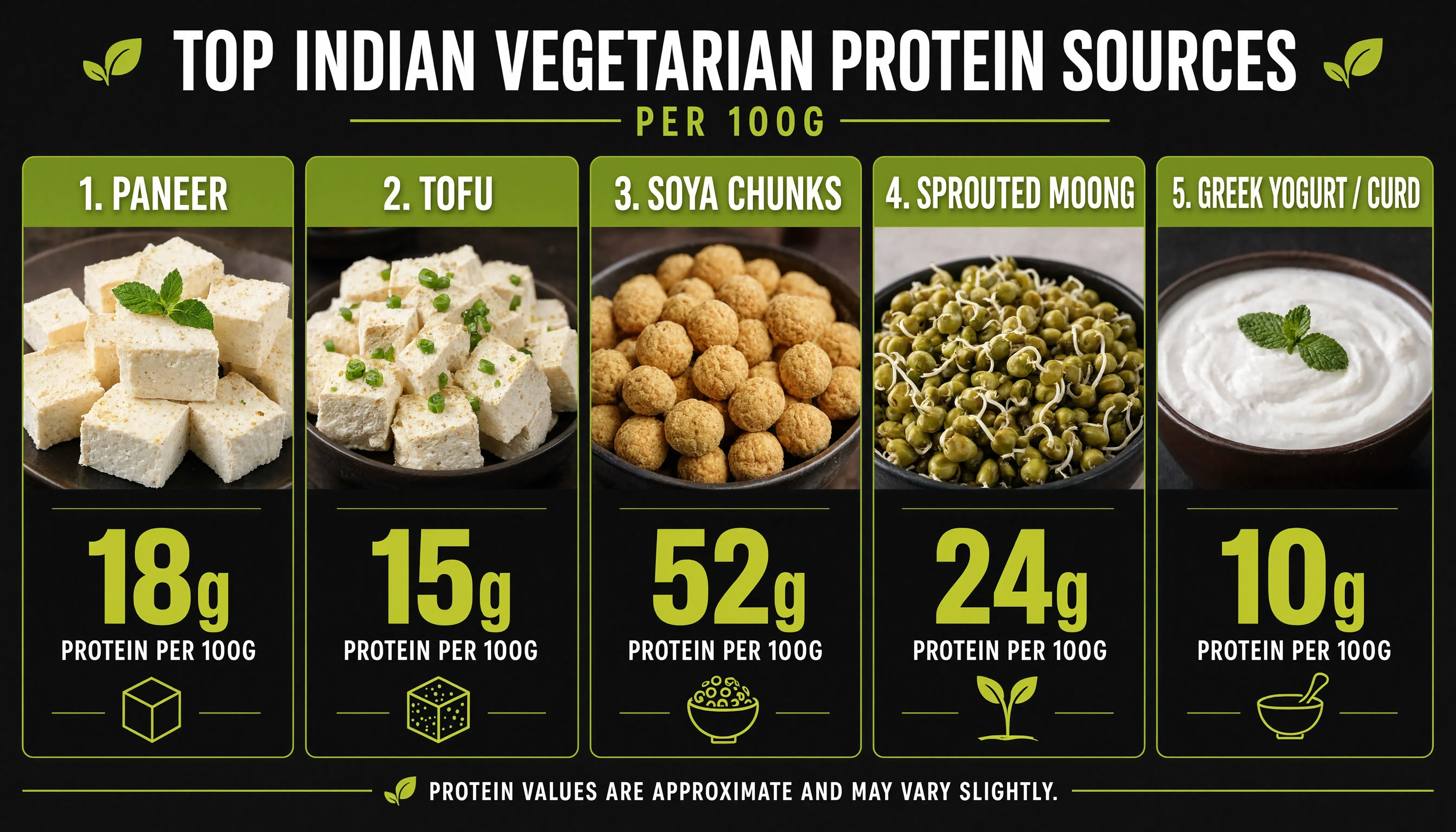
A typical thali provides 20–35 g protein from dal, curd, roti, and lentil-based dishes. Adding paneer or extra dal can increase the protein without raising calories as much as a deep-fried item.
Common Indian food calories to watch
The thali total usually changes because of small add-ons, not the dal itself:
| Food Item | Common Portion | Approx Calories |
|---|---|---|
| 🧈 Ghee on roti / dal | 1 tsp | 40–45 kcal |
| 🛢️ Oil in sabzi tadka | 1 tsp | 40–45 kcal |
| 🫓 Roasted papad | 1 piece | 40–70 kcal |
| 🌶️ Mixed pickle | 1 tsp | 10–15 kcal |
| 🧀 Fresh paneer | 50 g | 130–160 kcal |
| 🥛 Plain curd / dahi | 150 g | 90–100 kcal |
| 🍯 Gulab jamun | 1 piece | 140–180 kcal |
This is why two plates with the same roti, rice, dal, and sabzi can differ by 300 calories. Extra ghee, fried sides, sweets, and restaurant oil are usually the swing factors.
Practical tips for estimating your thali
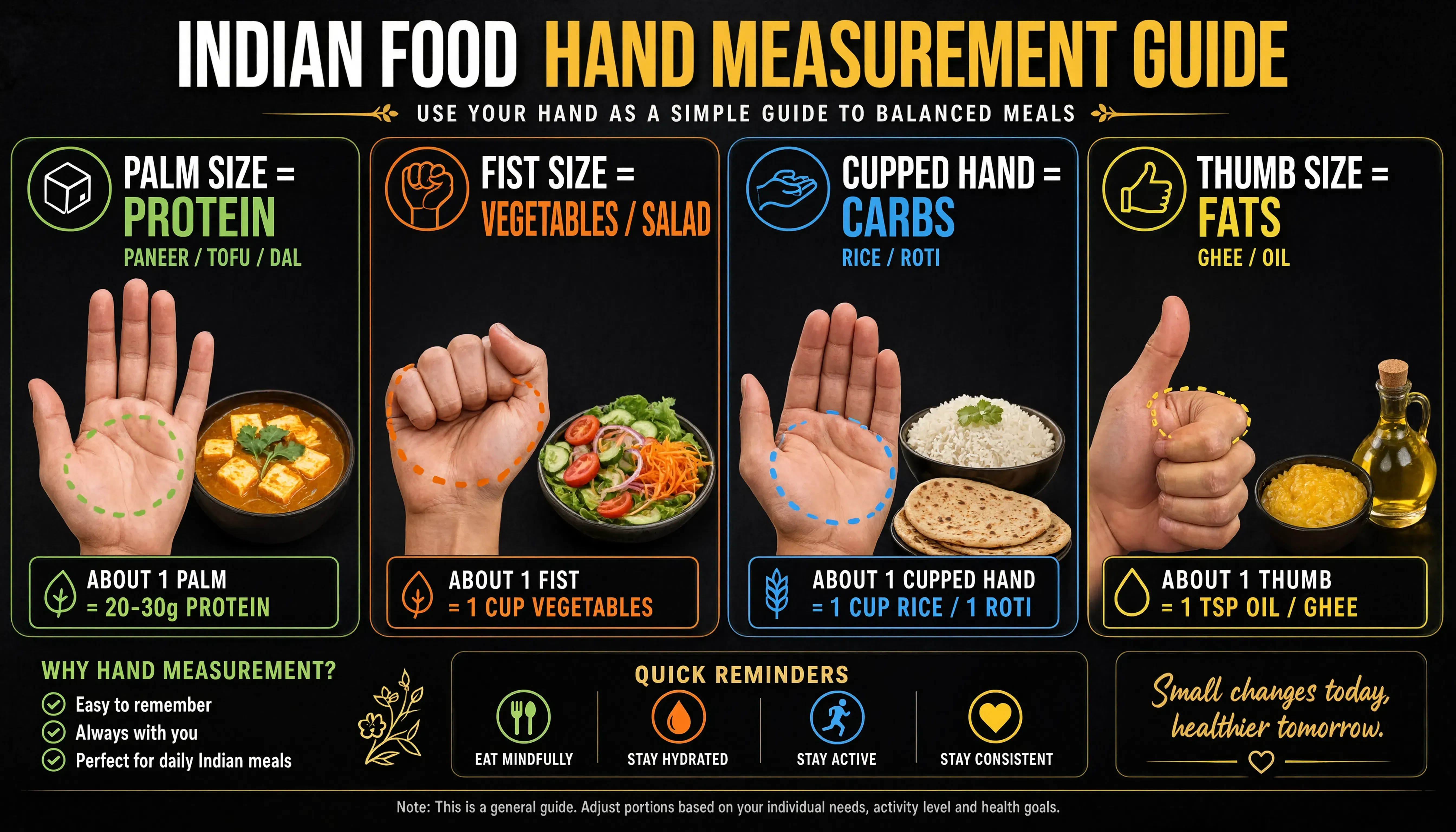
- Use a smaller roti or portion of rice if your goal is lower calories.
- Choose vegetable-based curries instead of cream-based or heavy potato dishes.
- Include curd or a small portion of paneer for protein.
- Treat sweets and fried items as optional extras.
Calculator links
- Indian Thali Calorie Calculator — estimate a thali meal with component details.
- Indian Food Calorie Calculator — check individual dish values.
- Recipe Nutrition Calculator — compare a full plate against a recipe-based estimate.
Limitations
- All values are estimates and depend on actual ingredients.
- Restaurant servings are usually larger and richer than home versions.
- Protein values vary based on the legume or dairy content.
Sources
- Indian Food Composition Tables (IFCT)
- Indian Council of Medical Research dietary guidance
- FSSAI food composition and meal planning resources
FAQs
What makes restaurant thalis different from home thalis?
Restaurants often use more oil and larger portions, which increases calories compared to smaller home-cooked plates.
Can a thali be part of a weight-loss meal?
Yes, a thali can be lower calorie if the portions are controlled and the plate focuses on vegetables, dal, and curd instead of excess rice or fried items.
Should I count papad and pickle separately?
Yes. They add calories and are easy to estimate, so counting them separately improves accuracy.
The extras decide your thali
A basic dal-roti-sabzi-salad thali sits around 450-550 calories — completely reasonable for weight loss. What pushes it to 900 is never the dal: it’s the second helping, the papad, the achaar-ka-tel, two spoons of ghee, and the “thoda sa” dessert. Count the plate as it actually reaches the table, not as the recipe imagines it. Weigh nothing, change nothing for one week — just photograph every thali. The camera roll will tell you exactly which extra to cut first.