

At What Body Fat % Do Abs Show? (Men vs Women)
For men, the body fat percentage for visible abs is usually 10-13%. For women, it is 16-20%. Learn how genetics, muscle mass, and fat distribution determine your definition.

Key Takeaways & Summary
For men, the body fat percentage for visible abs is usually 10-13%. For women, it is 16-20%. Learn how genetics, muscle mass, and fat distribution determine your definition.
US Navy Body Fat Calculator & Formula
Estimate body fat percentage and lean mass using neck, waist, and hip circumference.
When do you see your abs? For men, abdominal definition usually reveals itself between 10% and 13% body fat. For women, visible abs and toned core lines typically emerge between 16% and 20% body fat.
However, hitting a specific body fat percentage is not an automatic guarantee. Some individuals see distinct abdominal outlines at slightly higher percentages, while others need to get leaner. The exact threshold depends on three major factors: where your body genetically stores fat, how developed your abdominal muscles are, and your underlying skeletal framework.
Having visible abs does not automatically mean you are healthy, and you can be extraordinarily fit without a six-pack. Healthy body fat ranges are significantly broader than aesthetic fitness benchmarks. If you want to track your progress at home, consistent tape measurements and tracking trends over time are far more useful than fixating on a single number.
Body Fat Percentage for Abs: Men vs. Women Ranges
Here are the evidence-based body fat reference ranges for abdominal definition across both sexes:
Men
- 10% – 13% body fat: The primary “sweet spot” where a full six-pack is clearly visible without flexing.
- 14% – 15% body fat: Upper abs and top abdominal cuts begin showing, while the lower stomach often retains a soft layer.
- 9% or lower: Extreme, competition-level shredded definition with prominent vascularity and deep separation (difficult to maintain year-round).
Women
- 16% – 20% body fat: The athletic core definition range where vertical “11-lines” and abdominal contouring appear clearly.
- 21% – 22% body fat: Flat, athletic stomach profile with subtle upper ab separation in favorable lighting.
- 14% – 15% or lower: Contest lean, which carries increased risks of menstrual irregularity, energy crashes, and hormonal disruption.
Women naturally carry approximately 6% to 8% more essential body fat than men. Essential fat is stored in breast tissue, hips, thighs, and around reproductive organs to support normal endocrine and metabolic function. A woman at 18% body fat is exceptionally lean and athletic, whereas a man at 18% is in a standard healthy fitness range.
Healthy Body-Fat Ranges vs Visible-Abs Ranges
The body fat percentage required to reveal abdominal definition is often substantially lower than what is required for optimal health and longevity.
Many active men maintain peak cardiovascular health, strength, and hormone profiles in the 12% to 20% body fat range. Many women thrive metabolically in the 20% to 30% range.
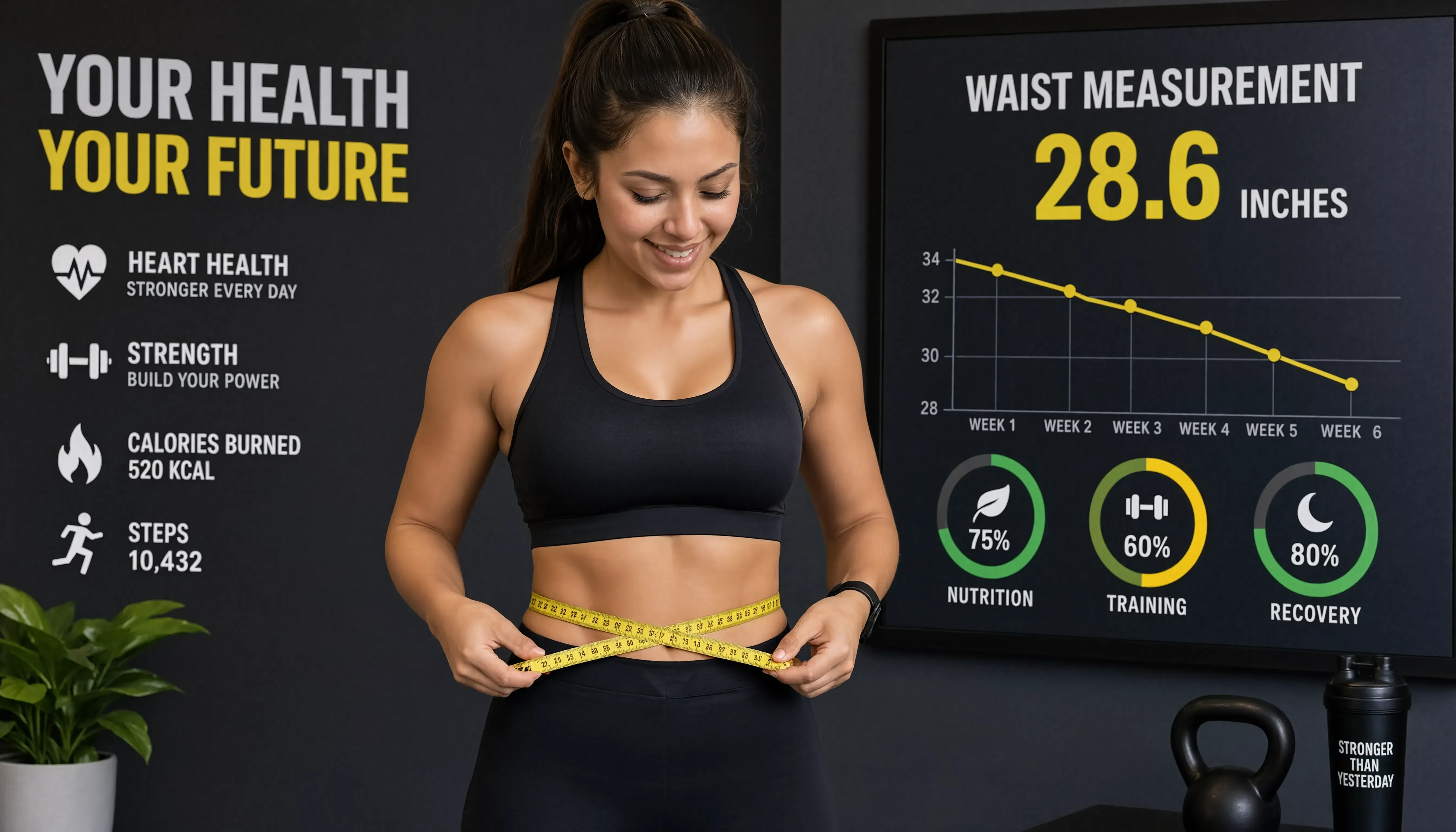
Instead of relying solely on body fat percentage, clinical health outcomes correlate more strongly with central visceral fat and your Waist-to-Height Ratio (WHtR).
- A simple guideline is to keep your waist circumference to less than half your height (
WHtR < 0.50). - You can calculate your specific ratio and health risk bracket using the Waist To Height Ratio Calculator.
Why the Same Percentage Looks Different on People
Two people with identical body fat percentages can look completely different in real life due to biological individuality:
- Regional Fat Distribution: Where your body prefers to store adipose tissue is largely genetic. If you naturally store fat in your extremities (arms and legs), your core will look lean even at a moderate body fat percentage. If you store fat centrally on your lower abdomen, you will need to reach a lower total body fat percentage before your abs appear.
- Abdominal Muscle Mass (Hypertrophy): Muscle pushes outward against the skin. Someone with well-developed, hypertrophied abdominal muscles from weighted training will see deep cuts and blocky separation at 14% body fat, whereas an untrained individual may look flat even at 11%.
- Genetics and Tendinous Intersections: The horizontal lines that create a “4-pack,” “6-pack,” or “8-pack” are determined by connective tissue bands called tendinous intersections. You cannot change your genetic tendon attachments or make asymmetrical abs symmetrical through exercise.
- Torso Length and Skeletal Structure: Torso proportions, ribcage width, and pelvic tilt change how abdominal tissue rests across your midsection.
Why Do Upper Abs Show Before Lower Abs?
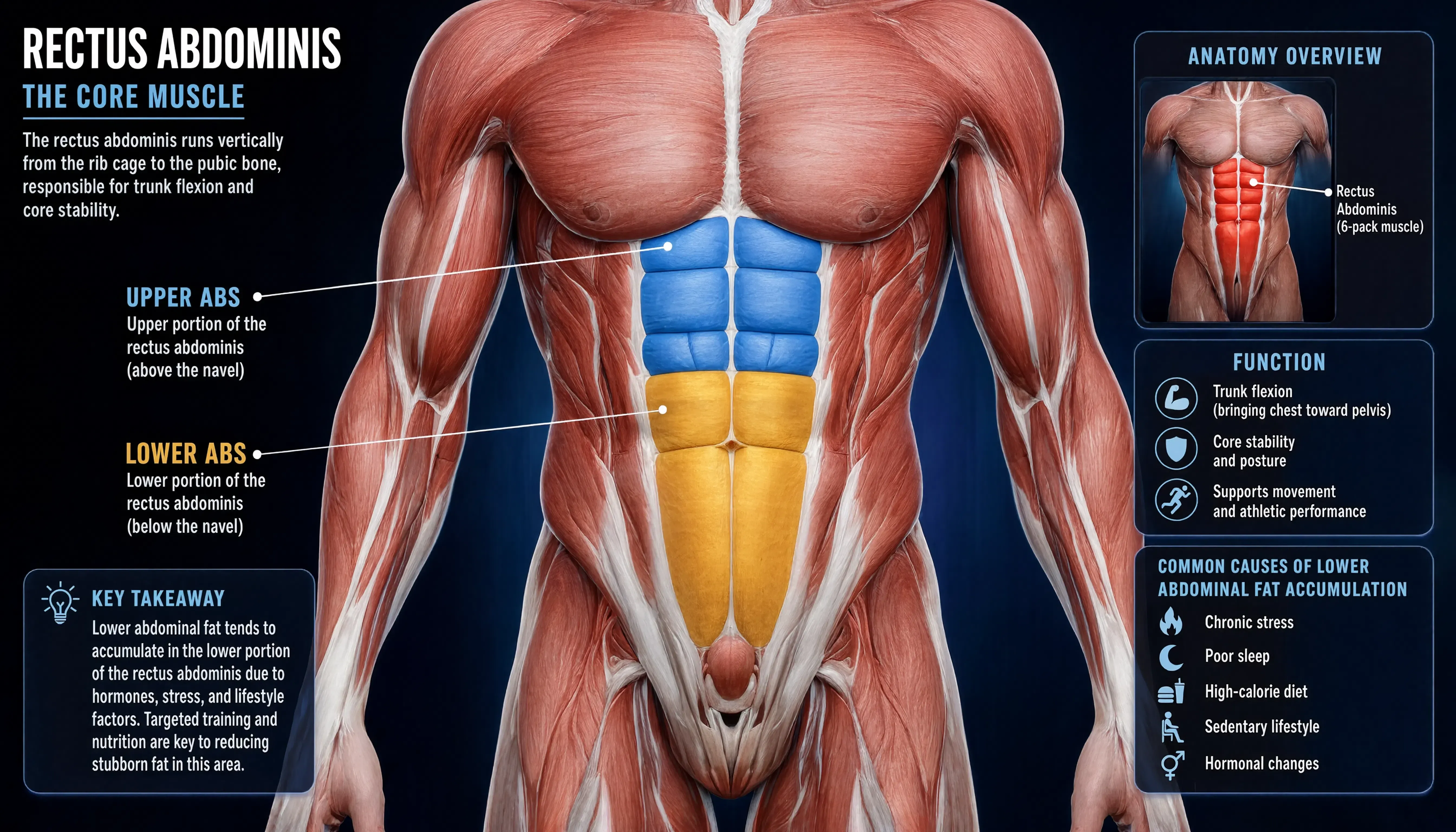
The Rectus Abdominis is one continuous sheet of muscle that runs from your sternum down to your pubic bone. There is no such thing as an isolated “lower ab muscle.”
The reason upper abs appear first while lower abs remain covered comes down to fat cell biology and blood flow:
- Upper Abdominal Area: High density of beta-2 adrenergic receptors, which stimulate rapid lipolysis (fat breakdown), coupled with superior capillary blood supply and a naturally thinner subcutaneous skinfold.
- Lower Abdominal Area: High density of alpha-2 adrenergic receptors, which actively inhibit fat breakdown. Lower belly fat functions as evolutionary protective padding and has reduced blood circulation, making it the last place your body releases stored energy.
Do You Need Direct Ab Training?
Losing body fat reveals whatever muscular foundation already exists underneath. However, dieting alone without hypertrophy will produce a flat stomach rather than defined, prominent abdominal blocks.
To build defined abs, apply progressive overload just as you would for your chest or back:
- Weighted Cable Crunches: Targets spinal flexion under load to build abdominal thickness.
- Hanging Leg / Knee Raises: Builds the lower portion of the core and hip flexor integration.
- Ab Wheel Rollouts & Planks: Builds anti-extension core stability and structural bracing.
Spot Reduction Myth: You cannot burn belly fat by doing crunches or sit-ups. Exercise strengthens the muscle underneath, but fat loss occurs systemically across your entire body through a sustained caloric deficit.
Why Online Body-Fat Photos Are Misleading
Photo comparison guides that claim to show “what 10% or 15% body fat looks like” are often highly misleading. Most fitness photos on social media are captured under ideal conditions:
- Gym Lighting: Downward overhead spotlighting creates deep shadows along muscle grooves, making someone look 3-4% leaner than they appear in flat daylight.
- Pumping & Dehydration: Temporary carbohydrate manipulation, water cuts, or an active workout pump dramatically increases vascularity and muscle fullness.
- Angles and Posture: Slight pelvic extension, breath control, and posing angles emphasize abdominal separation.
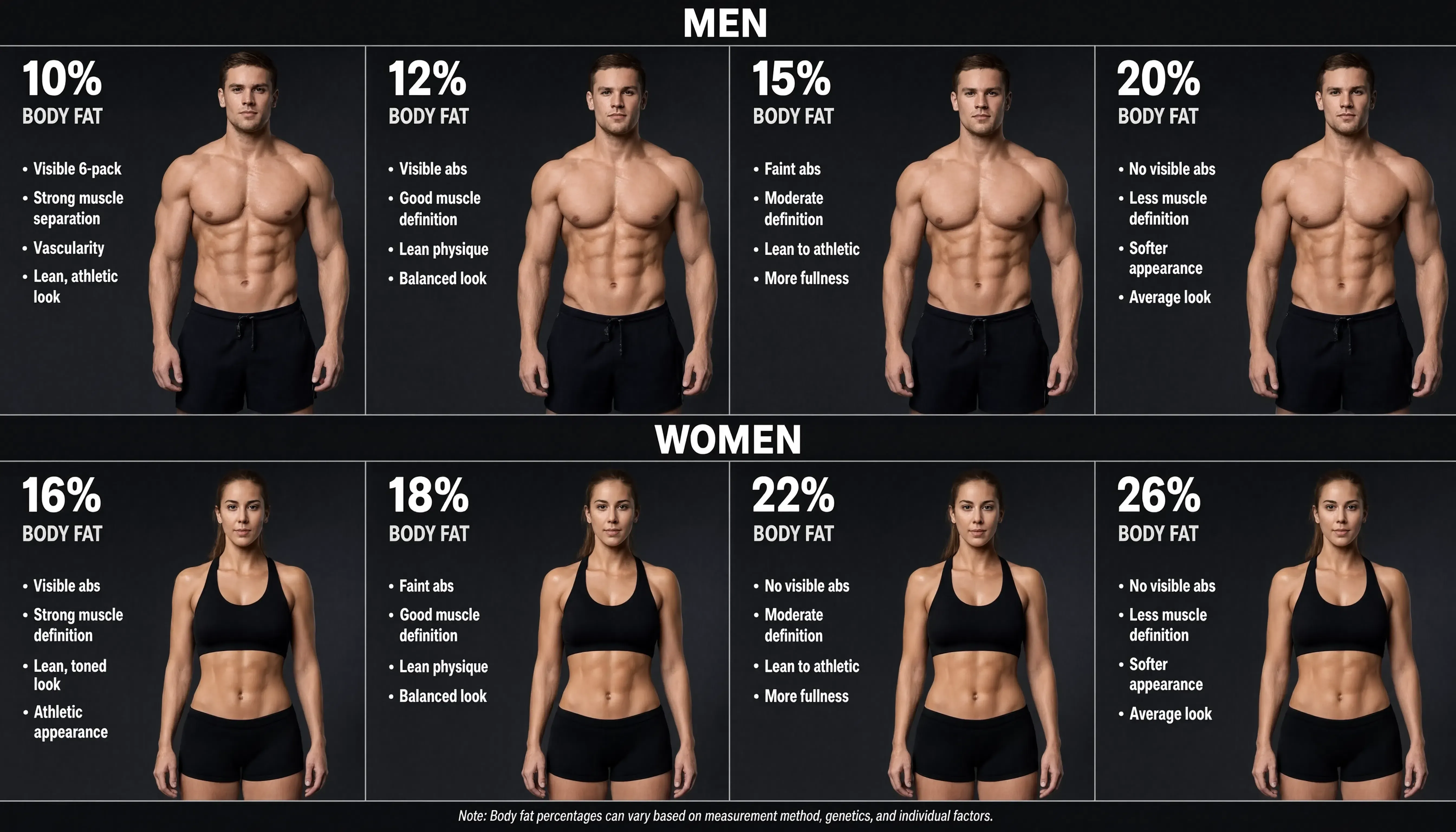
Important Visual Disclaimer: Visual charts and physique photos should only be used as rough ballpark estimates. Real-world abdominal definition varies significantly based on muscle volume, water retention, and individual genetics.
Is Low Body Fat Healthy?
Lower body fat is not always better. Maintaining sub-10% body fat for men or sub-16% for women year-round often exacts a heavy physiological toll:
- Hormonal Downregulation: Severe leanness can decrease testosterone in men and disrupt the hypothalamic-pituitary-gonadal axis in women, leading to amenorrhea (loss of menstrual cycle) and bone density reduction.
- Recovery and Sleep Quality: Chronic energy deficiency elevates cortisol, disturbs sleep architecture, and impairs muscular recovery.
- Metabolic Adaptation: The body decreases non-exercise activity thermogenesis (NEAT) and increases hunger hormones (ghrelin) to conserve energy.
Most fitness professionals recommend visiting ultra-lean percentages temporarily for specific events or seasons, and maintaining a lifestyle 3% to 5% above that floor for long-term health, energy, and strength.
How to Work Toward Abdominal Definition Safely
If your goal is to reduce body fat sustainably and reveal your core muscles, follow these structured steps:
- Establish a Moderate Energy Deficit: A daily deficit of 300 to 500 calories promotes steady fat loss (approximately 0.3 to 0.5 kg per week) while preserving metabolically active muscle mass.
- Prioritize Daily Protein Intake: Aim for 1.6 to 2.2 grams of protein per kilogram of body weight (0.7–1.0g per lb) to spare muscle tissue in a deficit.
- Maintain Heavy Resistance Training: Lift with consistent intensity to signal your body to retain muscle while oxidizing fat stores.
- Track Non-Exercise Activity (NEAT): Keep daily step counts consistent (e.g., 8,000–10,000 steps) to prevent metabolic slowdown.
- Be Patient with the Timeline: Revealing lower abs typically requires 12 to 24 weeks of consistent nutrition rather than rapid crash dieting.
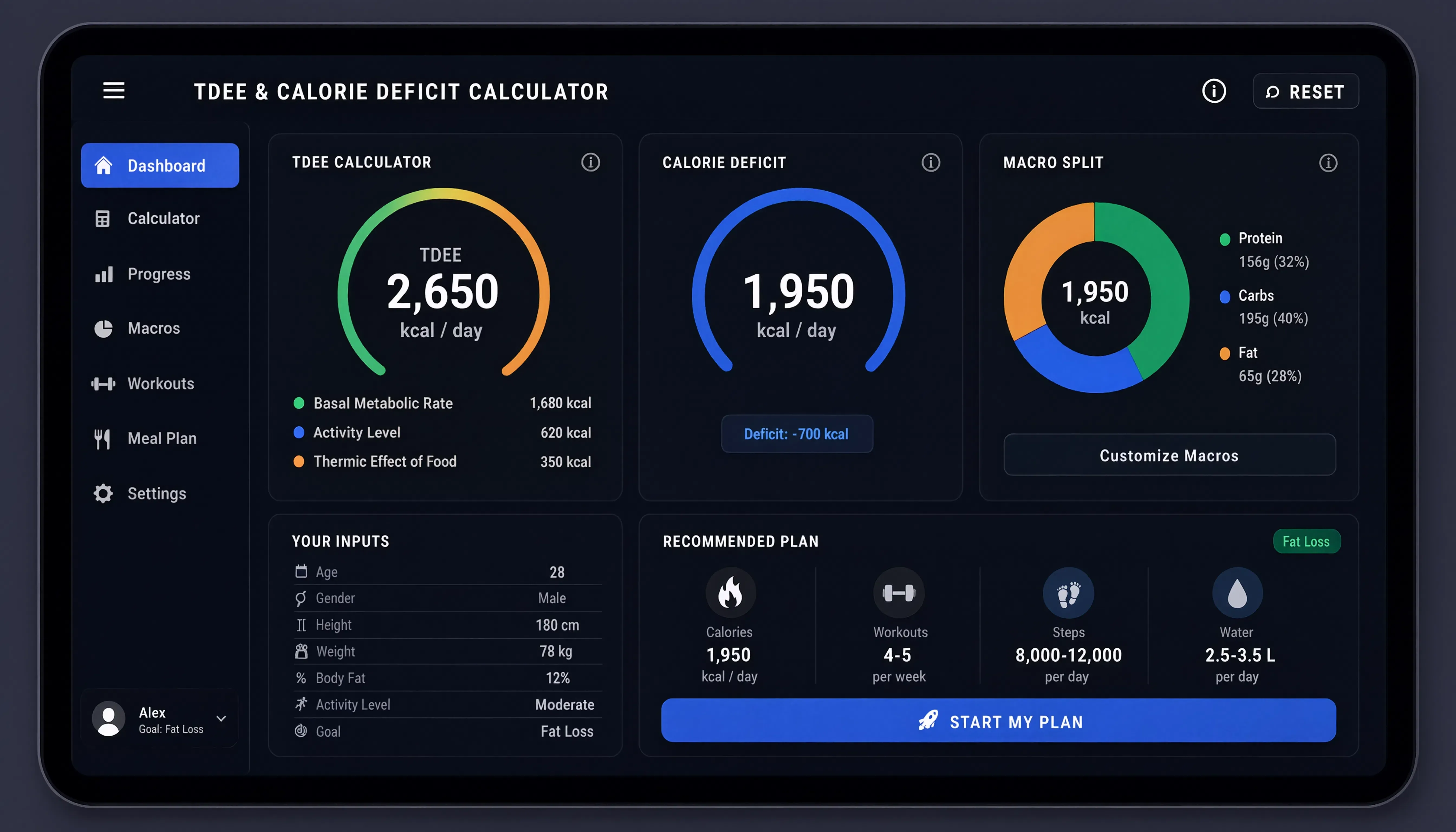
To find your exact baseline energy requirements and personalized fat loss targets, use our interactive fitness tools:
- Calorie Deficit Calculator: Calculate your daily calorie intake, fat loss timeline, and optimal macronutrient split.
- TDEE Calculator: Determine your Total Daily Energy Expenditure based on your activity level.
- Body Fat Calculator (US Navy Method): Track your body fat percentage and lean body mass at home using neck, waist, and hip circumference.
Abs vs. Health: The Realistic Perspective
Visible abs are an aesthetic metric, not a definitive health score. An individual with visible abs can suffer from nutrient deficiencies, chronic fatigue, and poor metabolic health, while someone at 16% body fat (men) or 24% (women) may have flawless blood panels, outstanding endurance, and robust strength.
Align your fitness targets with what you genuinely value: long-term vitality, joint mobility, stamina, and sustainable daily energy.
Frequently Asked Questions
At what body fat percentage do abs show for men?
Men usually begin seeing upper abdominal outlines between 13% and 15% body fat. A complete, defined six-pack typically emerges between 10% and 13% body fat.
At what body fat percentage do abs show for women?
Women generally see toned core definition and vertical “11-lines” between 16% and 20% body fat. Women require higher essential fat levels for endocrine and reproductive health.
Can you have abs at a higher body fat percentage?
Yes. Individuals with well-developed core muscles and genetic fat storage concentrated in the lower body or limbs can display abdominal definition at 14–16% (men) or 21–23% (women).
Why do upper abs show before lower abs?
The lower abdomen has a higher concentration of alpha-2 adrenergic receptors (which slow fat mobilization) and lower capillary blood flow compared to the upper abdominal wall.
Can ab exercises burn lower belly fat?
No. Exercises like leg raises and crunches build muscle hypertrophy, but they do not spot-reduce fat from the abdomen. Fat loss occurs across the whole body through a caloric deficit.
Does dehydration make abs look sharper?
Temporarily, yes. Mild dehydration pulls extracellular water from beneath the skin, creating a tighter look. However, deliberate dehydration is dangerous, impairs muscle performance, and is unsustainable.
Disclaimer: This article is for educational and informational purposes only and does not constitute medical advice. Consult a qualified healthcare professional or sports dietitian before making significant changes to your nutrition or exercise regimen.