

Sleepmaxxing: What Works, What Backfires
The viral sleep trend mixes useful habits with risky hacks. Learn which routines, trackers, and supplements are worth trying and which to skip.
Key Takeaways & Summary
The viral sleep trend mixes useful habits with risky hacks. Learn which routines, trackers, and supplements are worth trying and which to skip.
Sleepmaxxing — the practice of optimizing every aspect of your sleep to get the most out of each night — has become one of the more prominent wellness trends on TikTok and Instagram. Creators share elaborate bedtime routines, sleep tracking screenshots, mouth tape, blackout curtains, magnesium supplements, cold showers, and elaborate temperature protocols.
The useful part of “sleep optimization tips” is choosing the next adjustment. Ignore perfect answers.
The underlying motivation is sound. Sleep is one of the most powerful tools for physical recovery, cognitive function, mood regulation, and metabolic health. But the way sleepmaxxing is practiced online ranges from evidence-based sleep hygiene to unproven or potentially risky hacks.
This article separates what is genuinely supported by research from what is just noise — and identifies a few things that may cause more harm than good.
Medical disclaimer: This article is for general educational purposes only. Persistent sleep problems, loud snoring, daytime sleepiness, or symptoms suggesting sleep apnea require evaluation by a qualified healthcare professional. Do not delay medical care based on DIY sleep optimization.
What Is Sleepmaxxing?
Sleepmaxxing borrows its naming convention from other “maxxing” trends (proteinmaxxing, fibermaxxing, looksmaxxing) and applies it to sleep. The idea is to systematically maximize sleep quality and quantity through an accumulation of evidence-based habits and, in many social-media iterations, biohacking tools and supplements.
The core concept repackages established sleep hygiene science — much of which has been recommended by sleep medicine specialists for decades — into a structured, trackable routine. At its best, sleepmaxxing encourages people to take sleep seriously as a health priority. At its worst, it promotes excessive anxiety about sleep metrics, unproven supplements, and potentially dangerous practices like unsupervised mouth taping.
Why Sleep Matters for Fitness and Health
Sleep is when most of the body’s recovery, repair, and consolidation processes occur:
- Muscle recovery: Human growth hormone (HGH) is primarily secreted during deep (slow-wave) sleep. This hormone drives muscle protein synthesis and tissue repair following exercise.
- Cognitive function: Sleep consolidates procedural memory (skill learning) and improves reaction time, decision-making, and attention — all relevant to athletic performance.
- Metabolic health: Chronic sleep deprivation is associated with increased appetite, reduced insulin sensitivity, and greater fat accumulation — the opposite of what most fitness goals require.
- Immune function: The immune system performs critical maintenance during sleep. Consistently poor sleep is associated with increased susceptibility to illness.
- Mood and mental health: Sleep deprivation worsens anxiety, irritability, and emotional regulation — factors that affect training consistency and adherence.
The CDC recommends that adults aged 18–60 get at least 7 hours of sleep per night. Most adults need 7–9 hours for optimal function.
What Actually Works: Evidence-Based Sleep Optimization
Consistent Sleep and Wake Times
The single most impactful sleep habit is also the least exciting: go to bed and wake up at the same time every day, including weekends. This anchors your circadian rhythm — the internal 24-hour biological clock — which regulates hormonal cycles, body temperature, and sleep pressure.
Research consistently shows that circadian alignment improves sleep quality, reduces sleep latency (the time it takes to fall asleep), and increases the proportion of restorative slow-wave and REM sleep.
A Cool, Dark, Quiet Sleep Environment
Body temperature naturally drops during sleep onset. A bedroom temperature of 60–68°F (15–20°C) supports this process. Warmer rooms measurably disrupt sleep architecture.
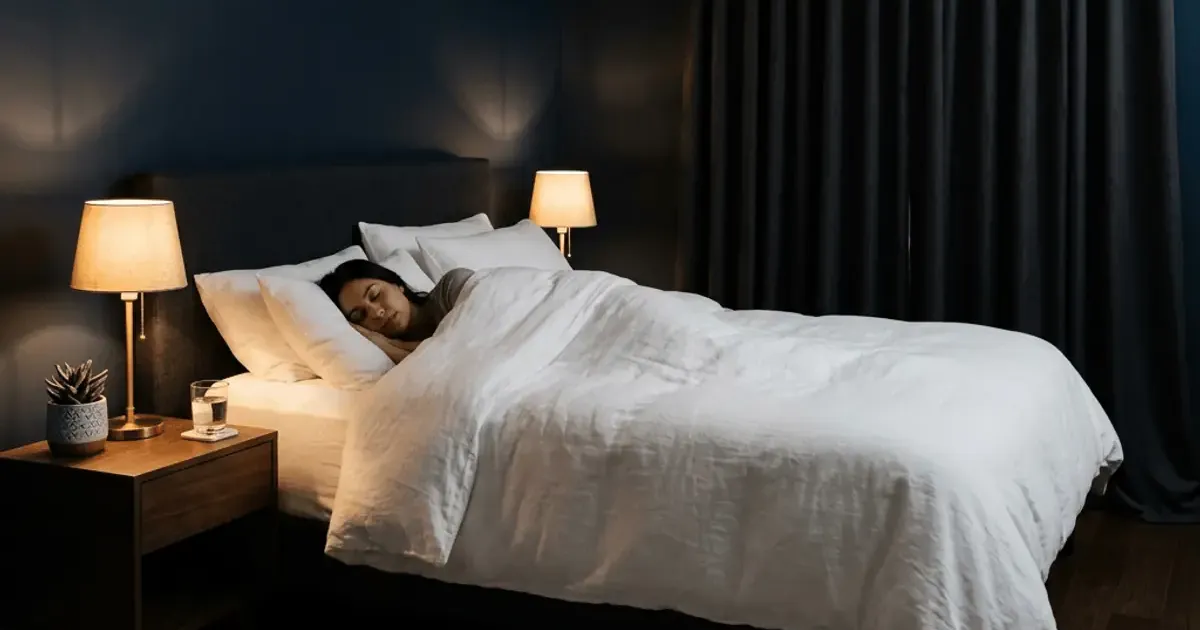
Light — particularly blue-wavelength light — suppresses melatonin production. Blackout curtains, eye masks, or eliminating light sources from electronics supports melatonin timing.
Noise disruption fragments sleep even without full waking. White noise, a fan, or earplugs can help if you sleep in a noisy environment.
Limiting Caffeine After Early Afternoon
Caffeine has a half-life of approximately 5–7 hours in most people. A 200 mg coffee consumed at 2 p.m. still has 100 mg of caffeine in your system by 7–9 p.m. Cutting off caffeine by 1–2 p.m. (or earlier for caffeine-sensitive individuals) meaningfully improves sleep onset and reduces nighttime wakefulness.
Avoiding Alcohol Near Bedtime
Alcohol is a sedative that initially makes falling asleep easier but disrupts sleep architecture significantly — reducing REM sleep and increasing light-stage wakefulness in the second half of the night. It also exacerbates sleep apnea symptoms. Finishing alcohol consumption 3–4 hours before bed reduces these effects.
Regular Exercise
Regular moderate-intensity aerobic exercise has strong evidence supporting improved sleep quality, reduced insomnia symptoms, and increased slow-wave sleep. Timing matters to a degree: vigorous exercise within 1–2 hours of bedtime can raise core temperature and heart rate in ways that delay sleep onset for some people, though individual responses vary.
Reducing Screen Exposure Before Bed
The evidence specifically implicates blue light from screens in suppressing melatonin production. Using night mode settings, blue-light-blocking glasses, or simply reducing screen use in the 1–2 hours before bed can help melatonin timing, particularly if you are already on the later end of your natural circadian phase.
Stress Management and Wind-Down Routines
Elevated cortisol (the primary stress hormone) at bedtime delays sleep onset and reduces sleep quality. Light reading, gentle stretching, journaling, or breathing exercises help downregulate the sympathetic nervous system before bed. These practices have clinical support from cognitive behavioral therapy for insomnia (CBT-I) research.
Supplements: What Has Evidence
Magnesium
Magnesium plays a role in GABA neurotransmitter function, which is involved in sleep regulation. Several small studies suggest that magnesium supplementation may modestly improve sleep quality, particularly in older adults with low baseline magnesium intake. Forms like magnesium glycinate or magnesium L-threonate are generally better tolerated than magnesium oxide. The evidence is promising but not conclusive for healthy younger adults with adequate dietary magnesium.
Melatonin
Melatonin is a hormone that signals to the body that it is time to sleep. Supplemental melatonin (0.5–3 mg, taken 30–60 minutes before target bedtime) has good evidence for helping with circadian disruption — jet lag, shift work, and delayed sleep phase. Evidence for improving sleep quality in people without circadian disruption is more limited. Low doses are generally as or more effective than high doses for most uses.
L-Theanine
An amino acid found in tea, L-theanine promotes relaxation without sedation by modulating alpha brain wave activity. Some research suggests it may reduce sleep latency and improve subjective sleep quality, particularly in anxious individuals. It is generally well-tolerated and considered low-risk.
What Does Not Have Strong Evidence (or May Be Harmful)
Mouth Taping
Mouth taping — sealing the mouth shut during sleep with adhesive tape to force nasal breathing — is one of the more controversial sleepmaxxing trends. Proponents claim it improves oxygen intake and sleep quality. The scientific evidence is very limited, and critically: mouth taping in people with undiagnosed or untreated sleep apnea or other respiratory conditions can be dangerous. Do not attempt mouth taping without medical clearance.
Tracking Sleep Too Obsessively
Consumer sleep trackers (Oura Ring, Apple Watch, Fitbit, Whoop) provide useful general patterns but are not medical-grade devices. Their ability to accurately stage sleep (REM, light, deep) has been found to be inconsistent compared to polysomnography (clinical sleep study).
An emerging concern in sleep medicine is orthosomnia — a paradoxical worsening of sleep caused by anxiety over sleep tracker data. If checking your sleep score is making you anxious, the tracker may be causing more harm than benefit. Use these devices as rough guides, not definitive scores.
Very High-Dose Melatonin
Doses of 5–10 mg of melatonin that are commonly sold in the United States are far above the physiological range. Higher doses do not produce better sleep and may cause grogginess, headaches, and disruption of the natural melatonin rhythm. Doses of 0.5–3 mg are more consistent with evidence.
Elaborate Supplement Stacks
Many sleepmaxxing creators promote combinations of 5–10 supplements taken before bed. Most of these stacks have little or no clinical evidence as a combination, and interactions between supplements are not well studied. When in doubt, prioritize the environmental and behavioral fundamentals, which consistently show stronger evidence than any supplement.
Sleepmaxxing and Fitness Performance
For athletes and fitness enthusiasts, sleep optimization has a direct impact on training adaptation, strength output, and injury resilience:
- Studies in athletes have found that even modest sleep extension (adding 30–60 minutes per night) improves sprint time, accuracy, reaction time, and subjective well-being.
- Sleep deprivation reduces testosterone and growth hormone secretion, both of which influence muscle repair and adaptation.
- Recovery from strength training sessions is measurably impaired when sleep is below 6 hours per night.
The practical priority for fitness enthusiasts: protect 7–9 hours of sleep as non-negotiable, create a consistent schedule that allows for this, and address environmental factors (temperature, darkness, noise) before investing in supplements.
A Practical Sleepmaxxing Routine (Evidence-Based)
Evening (2–3 hours before bed):
- Finish caffeine intake by early afternoon.
- Dim lights or use warm-toned lighting.
- Avoid large meals or alcohol within 2–3 hours of sleep.
- Light movement or gentle stretching.
30–60 minutes before bed:
- Reduce screen exposure or use blue-light filter settings.
- Take magnesium glycinate (if desired) and/or melatonin (0.5–1 mg if needed for timing).
- Wind-down activity: reading, journaling, breathing exercises.
- Set thermostat to 65–68°F.
Bedtime:
- Consistent time — within 30 minutes of your target.
- Dark, quiet room.
- No phone in bed.
Morning:
- Wake at a consistent time.
- Get bright light exposure within 30 minutes of waking — this anchors the circadian rhythm and improves next-night sleep pressure.
Frequently Asked Questions
Is sleepmaxxing good for you?
The core principles of sleepmaxxing — prioritizing sleep duration, creating a good sleep environment, maintaining consistent timing — are well-supported and beneficial. The extreme or trendy aspects (excessive supplement stacking, mouth taping without medical clearance, obsessive tracking) carry less evidence or real risks.
Does mouth taping improve sleep?
Evidence is extremely limited. For people without breathing difficulties, it may be harmless. For people with sleep apnea or nasal obstruction, it can be dangerous. Do not attempt without medical consultation.
Can magnesium improve sleep?
Possibly, particularly for people with low magnesium intake or older adults. The evidence is modest. Magnesium glycinate is generally well tolerated. It is unlikely to harm and may help with relaxation.
How accurate are sleep trackers?
Consumer sleep trackers are reasonable for tracking general trends (total sleep, typical bedtime, resting heart rate) but are not accurate for detailed sleep staging. Treat them as rough guides.
How much sleep do I need to build muscle?
Most research suggests that 7–9 hours per night optimizes the hormonal environment for muscle growth and recovery. Sleep deprivation below 6 hours significantly impairs the recovery process.
What is orthosomnia?
Orthosomnia is an excessive preoccupation with achieving perfect sleep metrics, typically driven by sleep tracker data, that paradoxically worsens sleep through anxiety. If your tracker is causing stress about sleep, consider using it less frequently.
Sleepmaxx the basics, skip the gadgets
The unglamorous 80%: same wake time daily (weekends included), no screens in the last 30 minutes, room cold and genuinely dark, caffeine done by 2 PM. That list beats every ₹3,000 gadget in the trend. Mouth taping is the one to actively avoid without a doctor’s sign-off — anyone with undiagnosed sleep apnea is gambling with it. If you want one purchase, make it blackout curtains; if you want one metric, track how you feel at 10 AM, not what a ring scored your REM.
Start with this “sleep optimization tips” framework. Refine it from outcomes.