

Sleep & Muscle Recovery: How Rest Builds Fitness Faster
Learn how sleep affects workout performance, muscle repair, hunger, soreness, and beginner fitness recovery.
Key Takeaways & Summary
Learn how sleep affects workout performance, muscle repair, hunger, soreness, and beginner fitness recovery.
When beginners start a new fitness routine, they usually focus entirely on what happens during the workout. They track their steps, monitor their heart rate, and carefully plan their meals. However, one of the most critical components of fitness progress happens when you are completely unconscious: sleep.
Ask what “sleep muscle recovery” can sustain in a normal week.
If you are putting in the effort at the gym but feeling exhausted, struggling to improve, or dealing with lingering soreness, the missing piece might not be a better workout plan. It might be a better sleep schedule.
What Happens to Your Body While You Sleep
Exercise is essentially a process of breaking down your body. When you lift weights or do cardio, you create microscopic tears in your muscle fibers and deplete your energy stores. You do not actually get stronger or fitter during the workout itself.
The magic happens during recovery, specifically during deep sleep. When you enter the deeper stages of sleep, your body releases growth hormone, which stimulates tissue growth and muscle repair. Your body also replenishes glycogen stores, which is the energy your muscles need for your next workout. Without adequate sleep, this repair process is cut short.
The Impact of Sleep Deprivation on Fitness
Skipping sleep does not just make you feel tired; it actively works against your fitness goals.
First, lack of sleep significantly reduces your physical performance. Your reaction time slows down, your endurance drops, and exercises that normally feel manageable suddenly feel incredibly heavy. This increases the risk of poor form and potential injury.
Second, poor sleep affects your hunger hormones. It increases ghrelin (the hormone that makes you feel hungry) and decreases leptin (the hormone that signals you are full). This hormonal imbalance makes it much harder to make healthy nutritional choices, often leading to cravings for high-sugar, high-calorie foods.
How to Optimize Your Sleep for Better Recovery
You do not need to sleep for twelve hours a day to see benefits. For most adults, aiming for seven to nine hours of quality sleep is the sweet spot. Here is how to make those hours count:
1. Create a Wind-Down Routine
Just as you warm up before a workout, you need to warm down before bed. Spend the last thirty minutes before sleep doing something relaxing. Read a book, do some light stretching, or listen to calm music. This signals to your brain that it is time to shift from active mode to recovery mode.
2. Manage Your Evening Environment
Your sleep environment plays a huge role in recovery. Keep your bedroom cool, dark, and quiet. The blue light from phones and televisions can interfere with your body’s production of melatonin, the sleep hormone. Try to put screens away at least an hour before bed.
3. Keep a Consistent Schedule
Your body thrives on routine. A consistent wake time is often easier to control than a perfect bedtime. Wake within the same 60-minute window most days, including weekends, and get a few minutes of morning daylight when possible. This helps regulate your internal clock and lets bedtime shift earlier naturally.
4. Watch Your Late-Day Caffeine
That late afternoon cup of coffee might help you get through the end of the workday, but caffeine can stay in your system for hours. If you struggle to fall asleep or wake feeling unrefreshed, test a caffeine cutoff 8 to 10 hours before bed for two weeks.
Signs You Need More Recovery
One poor workout is normal. A repeated pattern is more useful information. Consider reducing training intensity or adding a rest day when several of these appear together:
- warm-up weights repeatedly feel unusually heavy
- soreness does not fade between sessions
- sleep quality gets worse despite feeling tired
- motivation drops suddenly or irritability rises
- resting heart rate remains above your normal range
Easy walking, stretching, or mobility can be appropriate on a rest day, but do not turn every recovery day into another hard session.
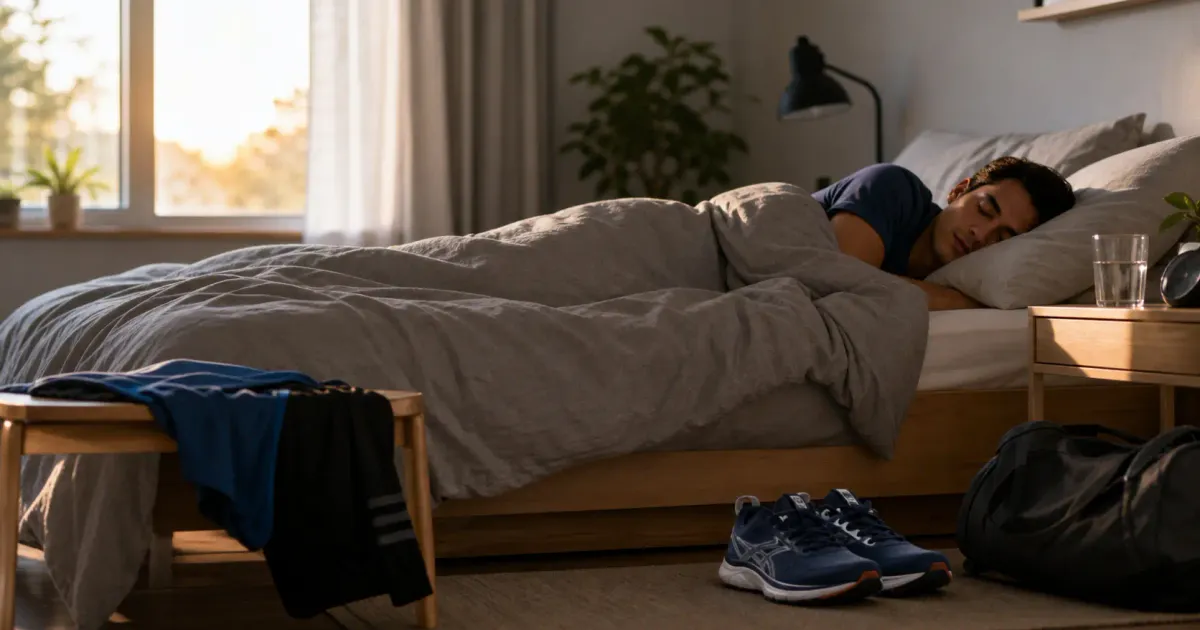
For a simple evening reset, dim the lights, put the phone away from the bed, prepare tomorrow’s workout clothes, and spend 10 to 20 minutes on calm reading, breathing, or light stretching. Repeatability matters more than making the routine elaborate.
Rest is Productive
It is easy to fall into the trap of thinking that more exercise always equals better results. But fitness is a balance of stress and recovery. By prioritizing your sleep, you are giving your body the time it needs to rebuild stronger, ensuring that the hard work you put in during the day actually pays off.
FAQ
How much sleep do beginners need for fitness recovery?
Most adults should aim for seven to nine hours of quality sleep. If you are training hard and sleeping much less than that, recovery and workout performance can suffer.
Does sleep help muscle growth?
Yes. Muscle repair happens during recovery, and sleep supports the hormones and tissue-repair processes your body uses after training.
Can poor sleep affect weight loss?
Poor sleep can make weight loss harder by increasing hunger, reducing energy, and making workouts feel more difficult.
Should I skip a workout if I slept badly?
If one night was poor, reduce intensity or do an easier session. If bad sleep is a pattern, prioritize recovery and fix the routine before adding more hard workouts.
Sleep is when the workout actually happens
The gym writes the cheque; sleep cashes it — growth hormone peaks in deep sleep, muscle repair runs overnight, and one short week measurably drops strength, willpower, and the hormones that decide where food goes. Under six hours, studies show diets lose more muscle and less fat at identical calories, which should terrify anyone grinding a deficit on five hours. The fix list is unglamorous: fixed wake time (weekends included), caffeine done by 2 PM, screens out of the last half hour, room dark enough to lose your own hand. Track how 10 AM feels, not what a ring scored the night.
Begin “sleep muscle recovery” here. Let your own trend guide changes.