

10-Minute Desk Mobility Routine for Office Workers
Desk days can make movement feel harder. This quick routine helps office workers reset hips, upper back, neck, and shoulders.
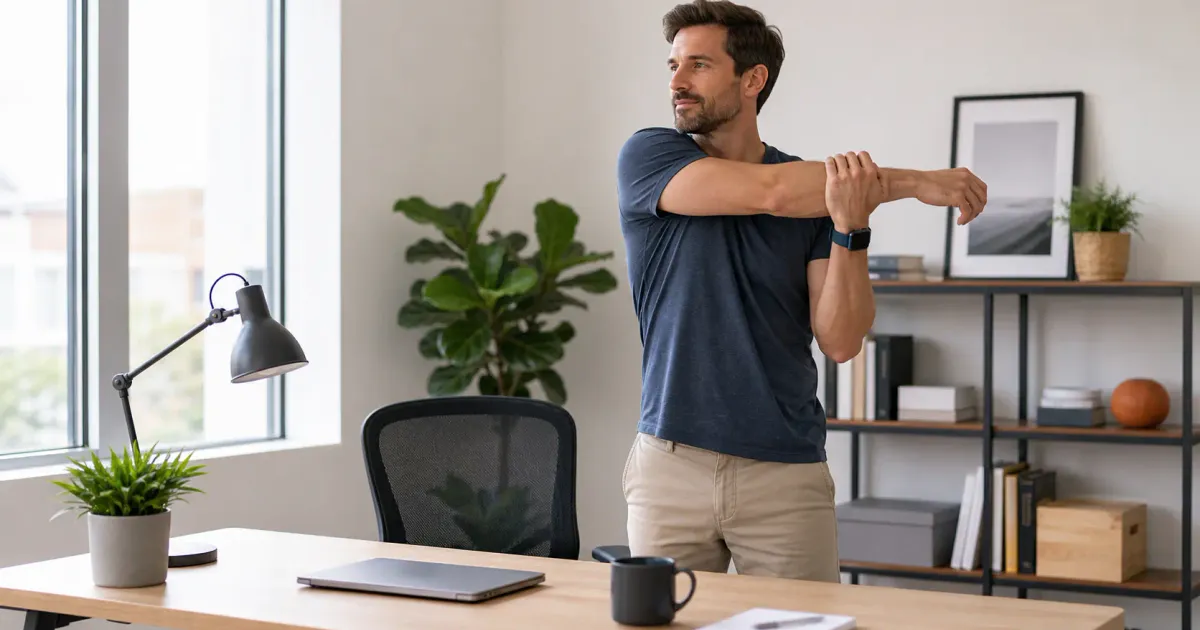
Key Takeaways & Summary
Desk days can make movement feel harder. This quick routine helps office workers reset hips, upper back, neck, and shoulders.
Long sitting can make your hips, upper back, neck, and shoulders feel stiff. You do not always need a long workout to feel better. A short mobility break can reset your posture and make it easier to move later.
For “desk mobility routine,” context can outweigh headline metrics.
This 10-minute routine is made for office workers, students, and anyone who spends many hours at a desk.
When to do it
Use it:
- Before work
- During a lunch break
- After long meetings
- Before your evening workout
- When your back feels stiff from sitting
You only need enough space to stand and move your arms.
Minute 1: Breathing and posture reset
Stand tall. Keep feet hip-width apart. Take slow breaths through the nose and let your shoulders drop.
Do 5 slow breaths. Then gently tuck your chin and lengthen the back of your neck.
Minutes 2-3: Neck and shoulder flow
Move slowly:
- 5 neck turns each side
- 5 shoulder rolls forward
- 5 shoulder rolls backward
- 10 arm circles
Do not force range. The goal is comfort.
Minutes 4-5: Upper back opener
Place your hands behind your head. Rotate your upper body left and right for 8 reps each side.
Then place hands on a desk or wall, step back, and push your chest slightly toward the floor. Hold for 30 seconds.
This can help open the chest and shoulders after typing.
Minutes 6-7: Hip reset
Do:
- 10 bodyweight good mornings
- 8 reverse lunges each side, supported by a chair if needed
- 20 seconds hip flexor stretch each side
Keep the movement controlled. If lunges bother your knees, do standing marches instead.
Minutes 8-9: Ankles and calves
Do:
- 15 calf raises
- 10 ankle circles each side
- 20 seconds calf stretch each side
Ankles matter more than people think. Better ankle movement can make squats, walking, and stairs feel smoother.
Minute 10: Walk
Walk for one minute. If possible, walk away from the screen. Let your eyes relax and breathe normally.
Optional swaps for stubborn stiffness
If the standard sequence misses the area that feels tight, swap in one or two of these drills:
- Chair thoracic rotation: Cross your arms over your chest and rotate gently for 8 reps per side.
- Hamstring hinge: Place one heel forward and hinge at the hips with a flat back for 8 slow reps per side.
- Wall slides: Slide your arms up and down a wall for 8 controlled reps while keeping your ribs relaxed.
The movement should feel mild and useful, never sharp.
Make the desk less demanding
Put both feet on the floor, keep the screen close to eye level, and change position regularly. Take calls standing when practical and walk for a few minutes after lunch. No desk setup makes eight motionless hours ideal; frequent position changes matter more than chasing a perfect posture.
Turn it into a habit
Set a daily reminder or attach the routine to a fixed moment, like after lunch. Log it in asterisks as mobility or active recovery. Seeing small movement sessions stack up can help you stay active even on busy days.
The 10-minute reset, minus the yoga mat
Everything here works in office clothes next to your desk: 90 seconds of hip flexor lunges per side, 10 slow thoracic rotations, 20 seconds hanging forward like a rag doll, doorway chest stretch, and ankle circles while you’re on a call. The sequence matters less than the schedule — 10 minutes at lunch beats 30 minutes “someday.” Stiff hips after 30 mostly aren’t a flexibility problem; they’re a frequency problem. Your body adapts to whatever it does for nine hours, so give it two minutes of counter-evidence every hour.
“desk mobility routine” becomes useful through one measurable action.
Safety note
Mobility should feel controlled and mild. Stop if you feel sharp pain, numbness, dizziness, or unusual symptoms. This routine is general information, not medical advice.