

Desk Job Back Pain: 10-Minute Daily Fix for IT Workers
Learn how to prevent back pain from sitting at a desk all day. Discover tips and routines to protect your spine and reduce discomfort.
Key Takeaways & Summary
Learn how to prevent back pain from sitting at a desk all day. Discover tips and routines to protect your spine and reduce discomfort.
Nine hours in a chair, a laptop below eye level, and a “5-minute break” that never happens — the standard Indian IT workday is basically a back-pain training program.
Ignore the noise around “desk job back pain exercises.” Keep only usable steps.
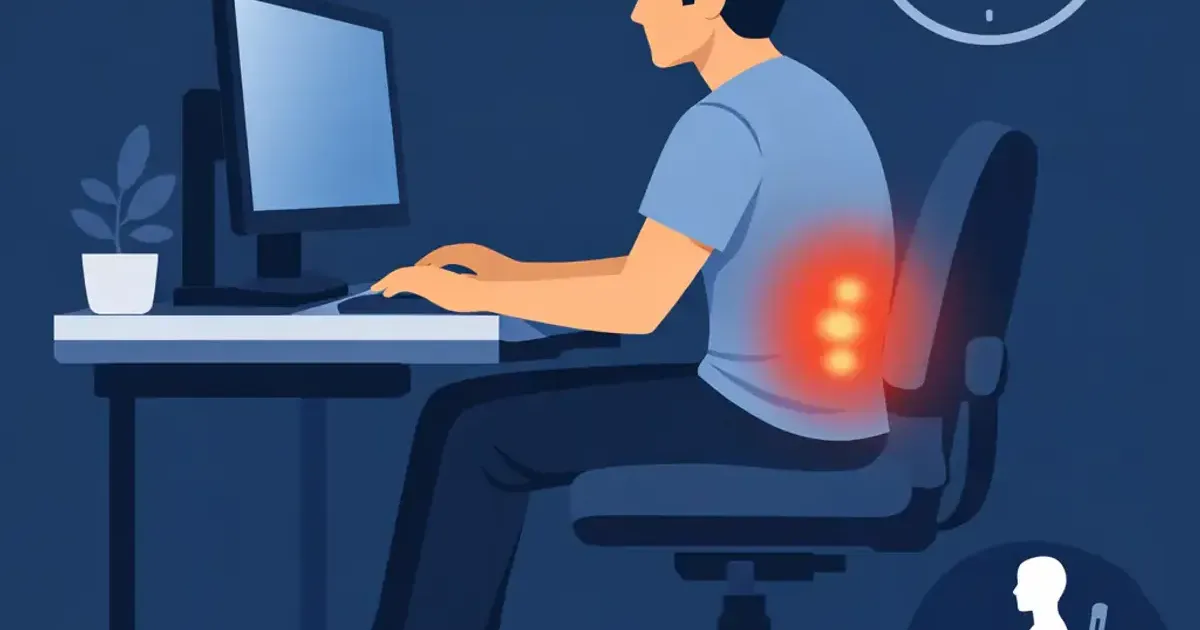
If you work in IT, you probably already know that sitting at a desk all day can hurt your back. Maybe you feel an ache by 4 p.m. Or a sharp pain when you stand up after a long meeting. Lower back pain is very common among people who sit in front of a screen all day. It doesn’t usually happen because of one injury. Instead, it builds up slowly over time, hour by hour and chair by chair.
This is not a substitute for seeing a doctor or physiotherapist. It is a practical look at why sitting at a desk all day can hurt your back, what habits make it worse, and what you can do to feel better.
Important: This article is about lifestyle and posture tips. If you have pain, numbness, tingling in your legs, or pain after an injury, see a doctor or physiotherapist before starting any new exercise routine.
Why Sitting All Day Hurts Your Back
Your spine is meant to move. Sitting for eight or nine hours a day makes it do the opposite: stay still in a slouched position for long periods.
Your Hip Flexors Get Tight, Your Glutes Get Weak
When you sit for hours, the muscles in the front of your hip get shorter, while the glute muscles that support your lower back don’t work much. This combination pulls your pelvis out of its natural position and adds pressure to your lower spine.
Poor Posture Makes It Worse
Laptops make this worse than desktops. A laptop screen sits low, so people tend to lean forward and round their shoulders and lower back just to see it clearly. Add a chair with no lumbar support and a habit of sitting on one leg tucked under you, and your spine ends up loaded unevenly for hours.
Long Meetings Mean Long Periods of Sitting
Back-to-back calls are worse for your spine than stretches of focused solo work. You mute yourself, stay seated, and two hours can pass without a stretch.
Stress Can Tighten Your Muscles
Tension doesn’t just stay in your mind. It often lands in your shoulders, neck, and lower back as physical tightness. A stressful week can leave you sore, even if you barely lifted anything.
Common Warning Signs Desk Workers Should Not Ignore
Lower back pain from sitting is usually mechanical, meaning it is related to posture, muscle imbalance, and lack of movement. Some symptoms need professional attention:
- Pain that spreads down one or both legs
- Numbness or tingling in your legs or feet
- Pain that wakes you up at night
- Pain following a fall, accident, or heavy lifting
- Weakness in your legs or trouble with bladder or bowel control
If none of these apply and the pain is a general ache, stiffness, or tightness that gets worse with sitting and better with movement, lifestyle changes can help.
What Actually Helps: The Desk-Worker Back Plan
1. Fix Your Workspace
Small changes to your workstation can reduce the load on your spine.
- Raise your laptop screen to eye level using a stand or books.
- Choose a chair with lumbar support or add a cushion.
- Keep your feet flat on the floor, with your knees level with your hips.
- Avoid sitting cross-legged or with one leg tucked under you.
2. Move Every 30 to 45 Minutes
Static posture is still static, even if it is good posture. Breaking up sitting time is key.
- Stand and stretch for one minute every 30 to 45 minutes.
- Take walks between meetings.
- Stand during phone calls.
3. Strengthen Your Core and Glutes
A strong core and glutes take pressure off your lower back. Try this routine three times a week:
| Exercise | Sets x Reps |
|---|---|
| Glute bridge | 3 x 12 |
| Bird dog | 3 x 10 per side |
| Dead bug | 3 x 10 per side |
| Wall sit or bodyweight squat | 3 x 30 seconds or 12 reps |
| Plank | 3 x 20 to 30 seconds |
4. Stretch Your Tight Muscles
The pain shows up in your lower back, but tightness usually starts elsewhere.
- Hip flexor stretch, held 30 seconds per side
- Spinal twist, held 20 to 30 seconds per side
- Child’s pose, held 30 to 45 seconds
- Hamstring stretch, held 30 seconds per side
5. Sleep and Stress Matter
Poor sleep lowers pain tolerance and slows muscle recovery. Managing stress can reduce muscle tension in your back.
A 2-Week Starting Routine
Week 1: Awareness and Setup
- Fix your screen height and chair support.
- Set a reminder to stand for one minute every hour.
- Add a five-minute stretch routine before bed.
Week 2: Add Strength
- Start the core and glute routine three times this week.
- Take a 10-minute walk after lunch.
- Track how your pain and stiffness change.
If pain doesn’t improve after two to three weeks, see a doctor or physiotherapist.
What Not to Do
Don’t stay still hoping the pain will pass. Gentle movement usually helps more than rest.
Don’t ignore leg symptoms. Numbness, tingling, or shooting pain needs professional assessment.
Don’t jump into lifting without guidance. Poor form can make things worse.
Don’t rely on painkillers as a long-term fix. They can mask the signal your body is giving you.
Key Takeaways
- Lower back pain in IT professionals is often caused by long sitting hours, poor posture, and underused glute and core muscles. It is not usually caused by one injury.
- If you have leg numbness, tingling, or pain after a fall, see a doctor instead of trying to fix it yourself at home.
- Making changes to your workstation, taking movement breaks every 30 to 45 minutes, and doing a simple strength routine can help fix most of the problems that cause lower back pain.
- Sleep and stress can affect how much pain you feel, not just how much you sit.
- Consistency with exercises and changes for two to three weeks matters more than doing one perfect stretch or exercise.
The 10 minutes that actually protect your back
You don’t need a standing desk or a ₹40,000 chair. You need a phone timer that fires every 45 minutes and three moves you’ll actually do: stand and reach overhead for 20 seconds, ten slow hip hinges, and a 30-second doorway chest stretch. That’s it — the magic is the frequency, not the exercises. Pair it with one honest rule: no meetings from the bed. Most desk-job back pain isn’t an injury, it’s an unpaid posture debt, and it clears the same way it built up — in small daily installments.
For “desk job back pain exercises,” consistent practice beats a flawless start.
Need Personal Guidance?
When back pain needs a professional
Need help applying this information to your training? Explore online coaching options.
Find a trainer