

Group Workouts: Why Training Together Keeps You Going
How walking clubs, run groups, outdoor circuits, and small fitness communities can make training easier to repeat.
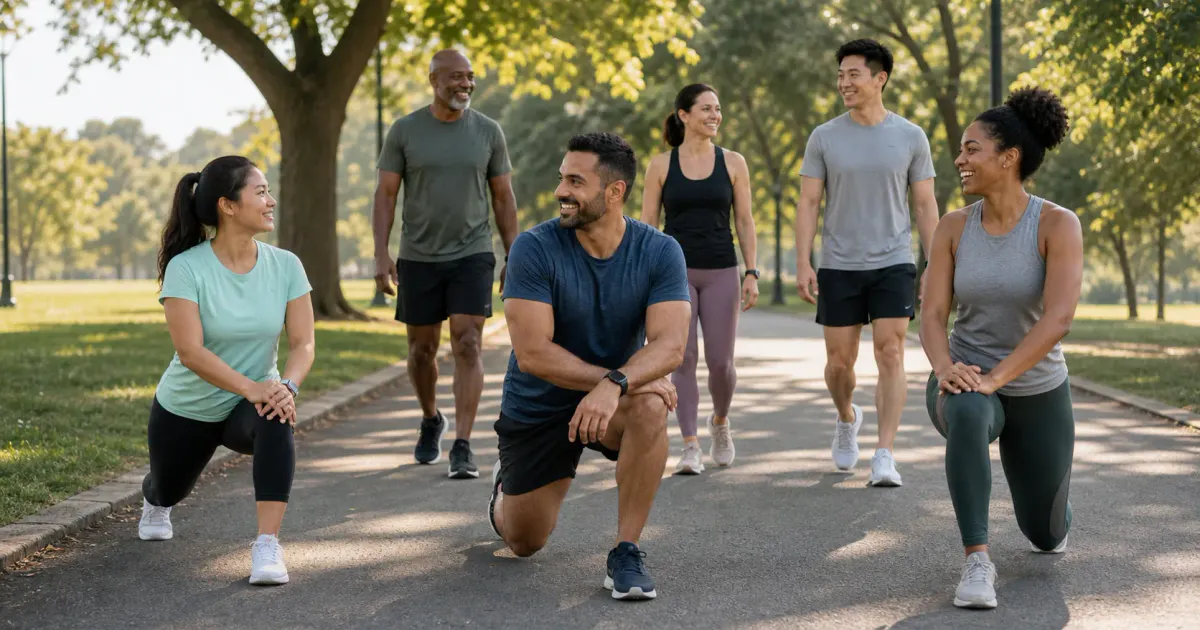
Key Takeaways & Summary
How walking clubs, run groups, outdoor circuits, and small fitness communities can make training easier to repeat.
Motivation is unreliable. Community is more practical.
Think of “group workout benefits” as a personal test. Do not follow formulas blindly.
One reason group workouts are growing is that they remove some of the hardest parts of fitness: deciding what to do, showing up alone, and wondering if you belong.
Why groups work
A good group gives you structure. There is a time, place, and plan. You only have to arrive.
It also adds light accountability. When people expect to see you, skipping becomes a little less automatic.
Beginner-friendly options
You do not have to join an intense class. Start with:
- Walking clubs
- Beginner run-walk groups
- Outdoor bodyweight sessions
- Yoga or Pilates basics
- Small strength classes
- Weekend hiking groups
Choose the group where the pace feels welcoming, not the one that looks most impressive online.
What to look for
A beginner-safe group should have:
- Clear warm-ups
- Scalable exercises
- Coaches or leaders who explain options
- No pressure to keep up with advanced members
- A friendly attitude toward new people
If the culture makes you feel embarrassed for being new, leave. There are better rooms.
Use community without losing your goals
Group energy is useful, but your body still matters. Scale exercises, take breaks, and track your own progress.
The goal is not to copy the fittest person there. The goal is to become more consistent than you were alone.
Try a four-week experiment
Pick one weekly group session and commit for four weeks. Do not judge it after one awkward first day.
After four weeks, ask:
- Did I show up more often?
- Did I enjoy training more?
- Did I feel supported?
- Did the workout match my current level?
If yes, keep it. If no, try a different format.
Fitness is personal, but it does not have to be lonely. For many beginners, the right group turns exercise from a task into a normal part of the week.
Borrow discipline until you grow your own
India’s gym data keeps confirming it: people attending with a partner show up about a quarter more often, and group formats now account for nearly a third of all workouts. That’s not a coincidence — it’s outsourced accountability. On the days motivation is empty, “they’re expecting me” carries the bag. If a class or partner isn’t available, manufacture the effect: a fixed slot with a friend on WhatsApp check-in, a run club, even a standing reel-worthy Sunday cycle. Solo discipline is a skill you build; community is the scaffolding while it sets.
Test “group workout benefits” for repeatability, measurement and recovery.