

BMR Calculator: Find & Use Your Number for Fat Loss
Use the BMR calculator first, then learn how BMR, RMR, TDEE, and calorie deficits work for sustainable weight loss.

Key Takeaways & Summary
Use the BMR calculator first, then learn how BMR, RMR, TDEE, and calorie deficits work for sustainable weight loss.
If you have ever tried to figure out how many calories you should eat to lose weight, you have likely come across the term BMR, or Basal Metabolic Rate. If you need the estimate first, use the BMR Calculator before reading the explanation.
People researching “BMR calculator kg” need a testable baseline. Skip rigid rules.
Many people calculate this number, get confused, and end up eating far too little or making their diet impossible to follow.
Understanding what your BMR actually represents is the first step to building a fat-loss plan that works over the long term.
Calculator-first workflow
- Enter age, sex, height, and weight in the BMR calculator.
- Use the TDEE calculator to add activity level.
- Create a moderate deficit from TDEE, not from BMR.
- Track the real trend for two to four weeks.
- Adjust only if weight, energy, hunger, and training feedback point the same way.
BMR is not your diet target. It is the baseline number used to estimate the full daily number.
What matters first
Your Basal Metabolic Rate (BMR) is the absolute baseline of energy your body needs just to stay alive.
If you lay in bed all day without moving a single muscle, your body would still burn this exact number of calories to keep your heart beating, lungs inflating, brain functioning, and body temperature regulated.
BMR does not include the energy you use to walk, wash dishes, work, or exercise. It is your baseline operating cost.
BMR vs RMR
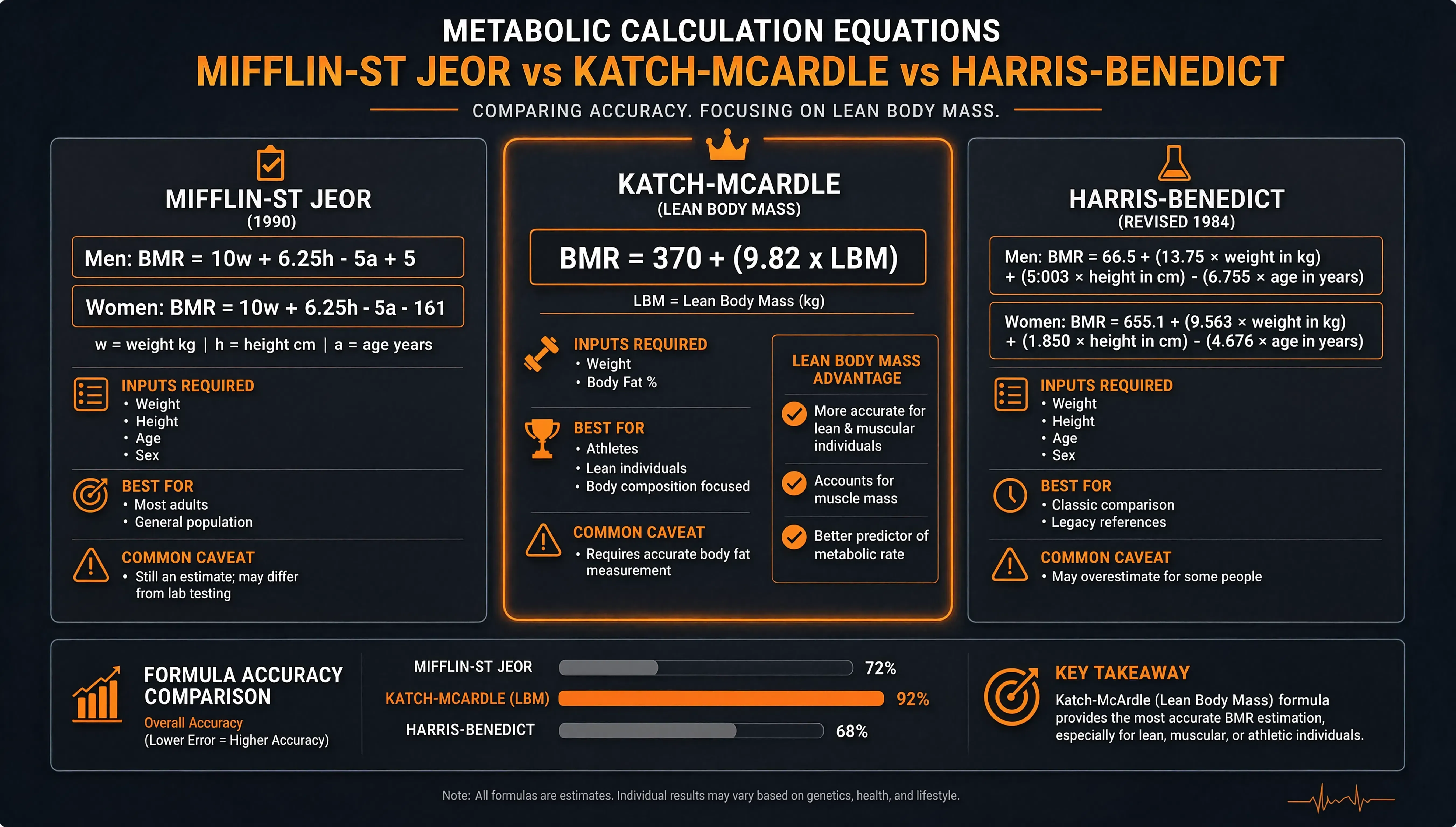
BMR and RMR are often used together, but they are not exactly the same.
- BMR is measured under stricter lab conditions after rest and fasting.
- RMR is resting metabolic rate, measured with slightly less strict conditions.
- In everyday fitness planning, both are estimates of your resting calorie burn.
For most people using an online calculator, the practical difference is small. The bigger mistake is not BMR vs RMR. The bigger mistake is using either number as your full daily calorie burn. Your calorie target should still be based on TDEE.
BMR vs. TDEE: The critical difference
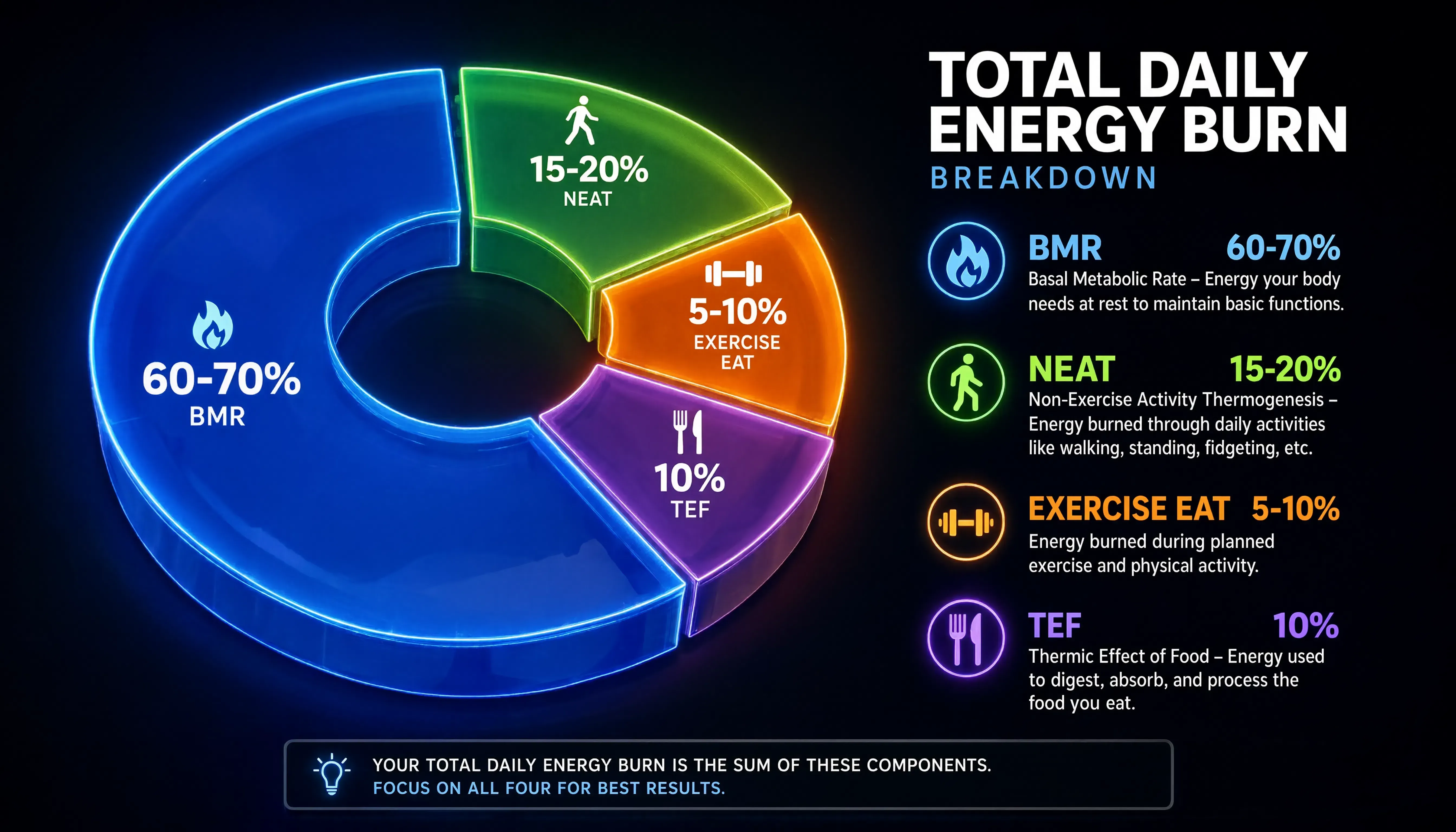
The biggest mistake beginners make is confusing BMR with TDEE (Total Daily Energy Expenditure).
- BMR: Your resting metabolic rate (sleeping/lying down).
- TDEE: Your BMR plus the calories burned through daily movement, digestion, work, and workouts.
Your calorie target for weight loss should be based on your TDEE, not your BMR.
If your BMR is 1,600 calories and your TDEE is 2,200 calories (due to your activity), setting a calorie target of 1,200 is too low. It drops you well below your BMR, which can lead to extreme fatigue, muscle loss, and intense hunger cravings that make you quit.
How to use BMR for weight loss: Step-by-step
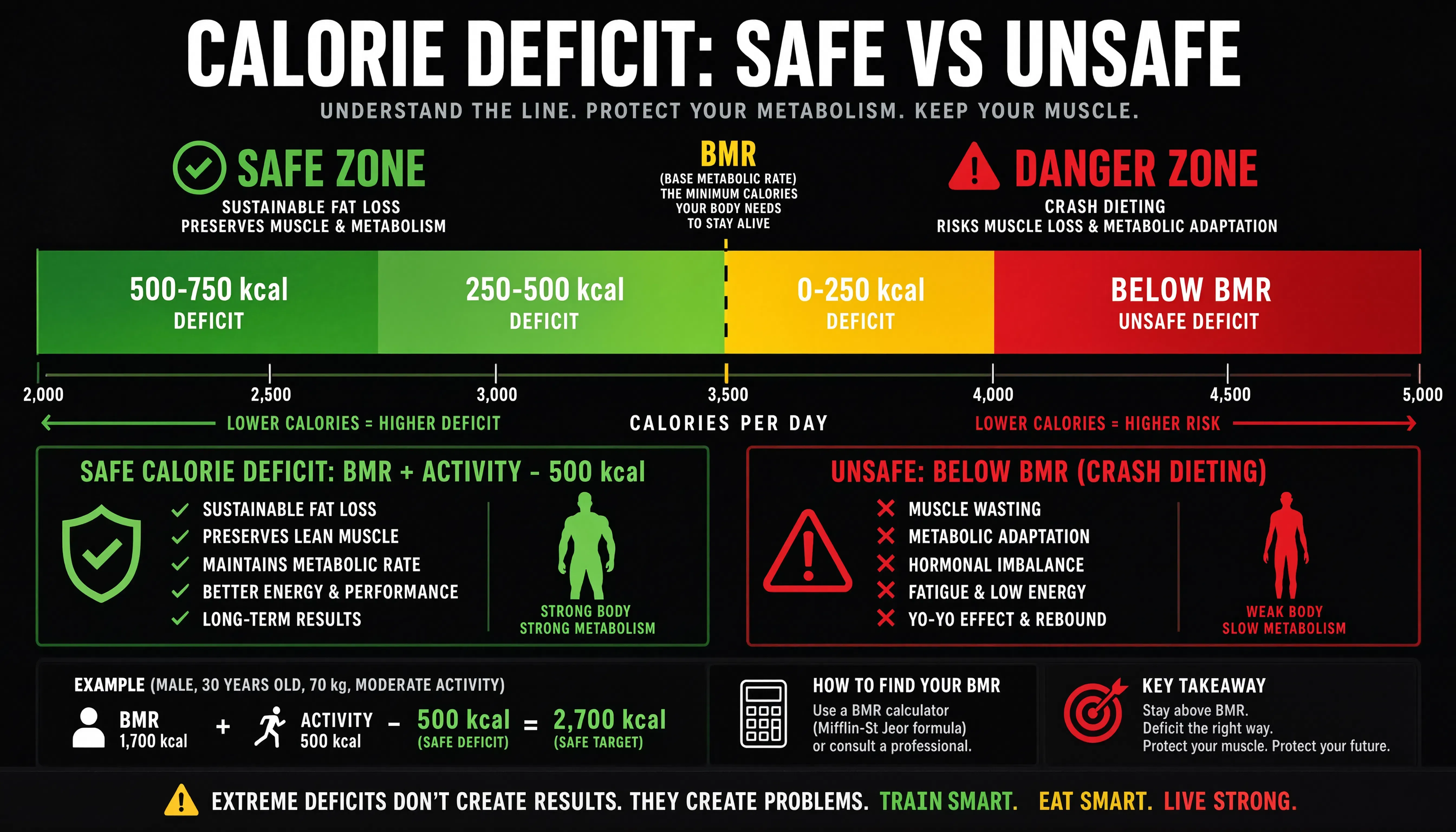
To set a healthy target, use this simple sequence:
- Find your BMR: Use a calculator to get an estimate based on your age, gender, height, and weight.
- Determine your TDEE: Multiply your BMR by an activity factor (sedentary, lightly active, active) to find how many calories you burn in a typical day.
- Subtract a moderate deficit: Subtract 300 to 500 calories from your TDEE to create your weight loss target.
- Compare to your BMR: Ensure your target is not significantly lower than your BMR. If your BMR is 1,500, try to stay at or above 1,500 calories and create the rest of your deficit by moving more.
Practical example:
- BMR: 1,500 calories
- TDEE: 2,100 calories (lightly active)
- Calorie Deficit Target (TDEE - 500): 1,600 calories
Eating 1,600 calories puts you in a safe deficit of 500 calories below your daily burn, while still providing enough energy to cover your basic biological functions (BMR of 1,500).
Why eating below your BMR is risky
When you chronically eat fewer calories than your BMR, your body enters a high-stress state. To conserve energy, it begins to downregulate non-essential systems:
- You feel sluggish and cold.
- Your recovery from exercise slows down.
- Your body starts breaking down muscle tissue for energy, which actually lowers your metabolism over time.
- Sleep quality degrades, and food cravings skyrocket.
A successful plan is one you can sustain for months, not days. Keep your calorie intake reasonable.
Calculate it
Use these in order:
- BMR Calculator: estimate your resting baseline.
- TDEE Calculator: estimate full daily burn after activity.
- Calorie Deficit Calculator: choose a moderate target from TDEE.
FAQs
Does BMR change as you lose weight?
Yes. As you lose weight, your body requires less energy to function. Your BMR will decrease slightly. It is a good idea to recalculate your numbers every 10 to 15 pounds lost.
How can I increase my BMR?
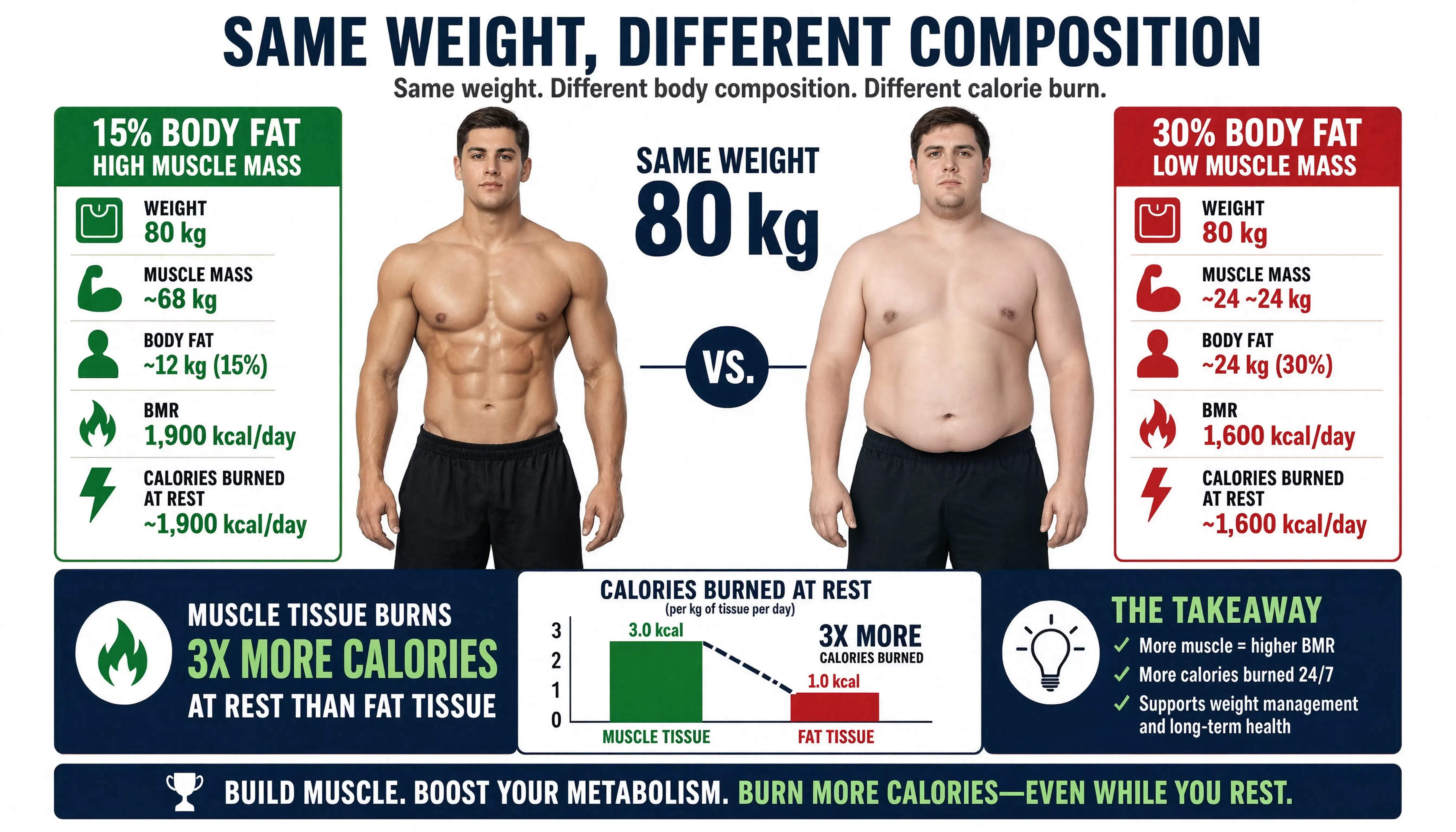
The most effective way to raise your BMR is to build lean muscle mass. Muscle tissue requires more energy to maintain at rest than fat tissue.
Is the BMR calculator 100% accurate?
No. Calculators use mathematical formulas (like Harris-Benedict or Mifflin-St Jeor) to give a highly accurate estimate, but genetics, muscle mass, and thyroid health can cause variations. Use the result as a starting point and adjust based on real-world weight trends.
Your BMR number: what to do (and not do) with it
The calculator hands you, say, 1,450 — here’s the entire correct response: multiply by your activity factor (desk job with 3 gym days ≈ 1.4-1.5) to get TDEE around 2,100, then subtract 400 for fat loss. Done. The wrong response, seen everywhere: eating at BMR itself, a coma-budget for a walking, working, thinking human — sustainable for two hungry weeks, followed by the great rebound. One more trap: BMR calculators drift 10-15% either way at the individual level. Treat the number as a first draft that two weeks of scale data gets to edit.
That is the practical takeaway behind “BMR calculator kg”: start sensibly, then adjust from evidence.